Turning goat manure into safe, effective fertilizer

With proper composting, goat manure is gold for gardens—weed-free, pelletized, and packed with microbes.

Start small, monitor moisture/heat, and you’ll have black gold in 2–3 months.

Below is a practical, step-by-step guide to turning goat manure into safe, effective fertilizer.

Goat manure is excellent—hot (high in nitrogen), low-odor compared to cow or pig, and pelletized so it’s easy to handle—but it must be composted or aged before use to kill pathogens (e.g., E. coli, Salmonella) and weed seeds, and to prevent burning plants.

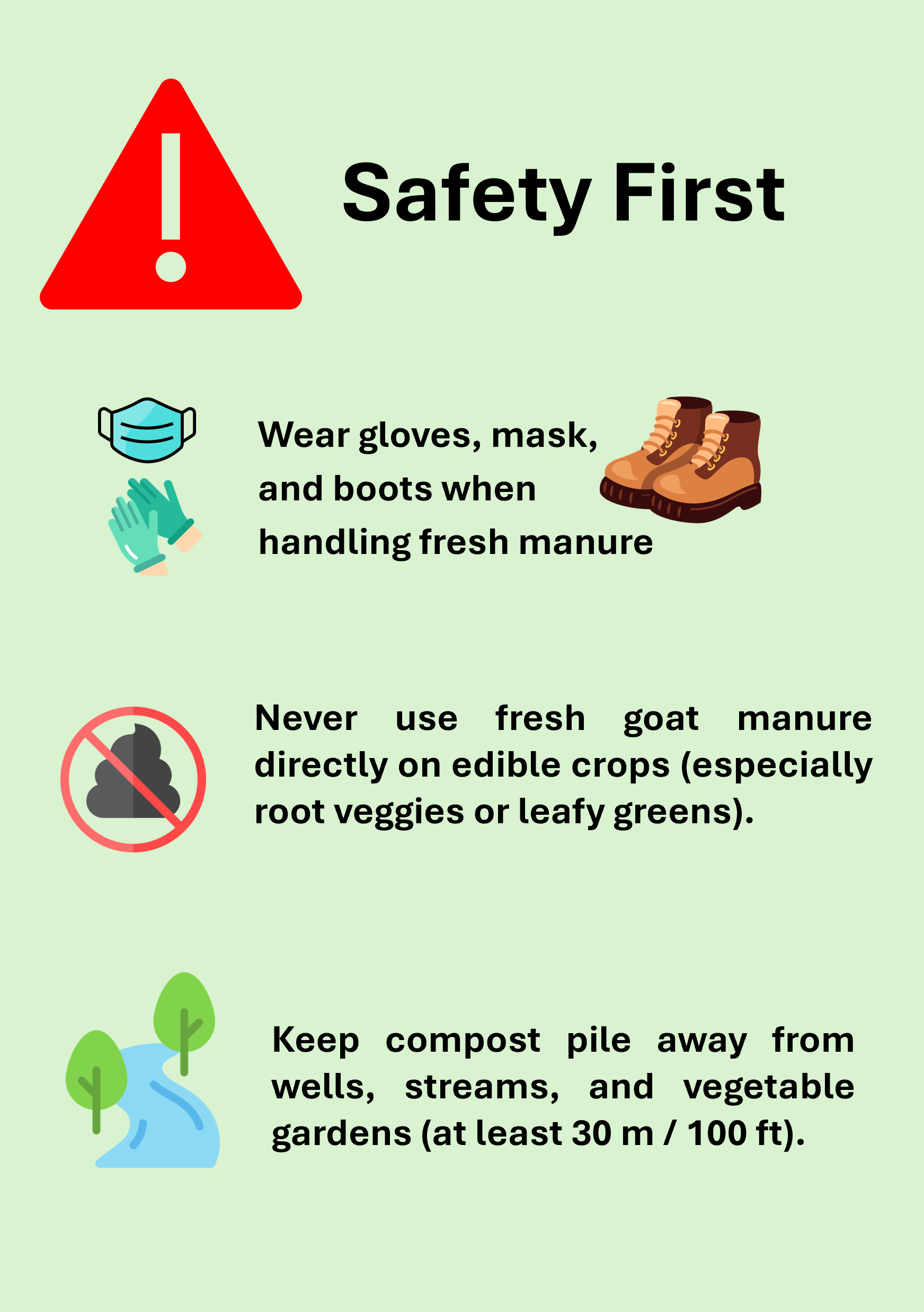
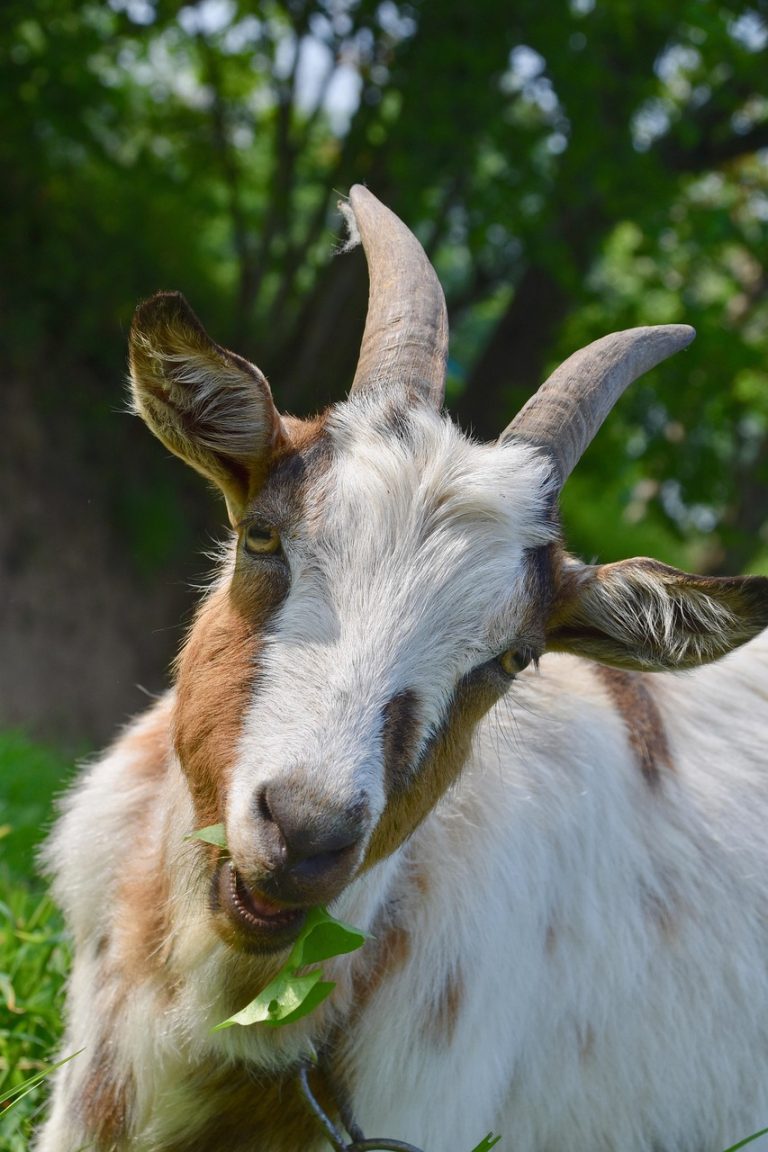
Image by JackieLou DL from Pixabay

Application Rates (Composted/Aged Only)

Crop Type

Amount per 10 m² (100 ft²)

Heavy feeders (tomatoes, corn)

20–40 L (2–4 buckets)

Leafy greens

10–20 L

Lawns

5–10 L (top-dress & rake in)

Potting mix

Up to 20% by volume

Pro tip:

Mix with wood ash (goats often lack potassium) at 1:10 ratio for balanced NPK.

Liquid Fertilizer (Compost Tea)

  1. Fill a 20 L bucket ⅓ with finished compost.
  2. Add water, stir and cover.
  3. Steep 3–7 days, stirring daily.
  4. Strain; dilute 1:10 with water.
  5. Use as foliar feed or soil drench (every 2 weeks).

Why Goat Manure Works for Slow-Release

  • Naturally pelletized → easy to process
  • High lignin + microbes → slow breakdown
  • NPK ≈ 2.5-1.5-2.5 (fresh) → ideal base

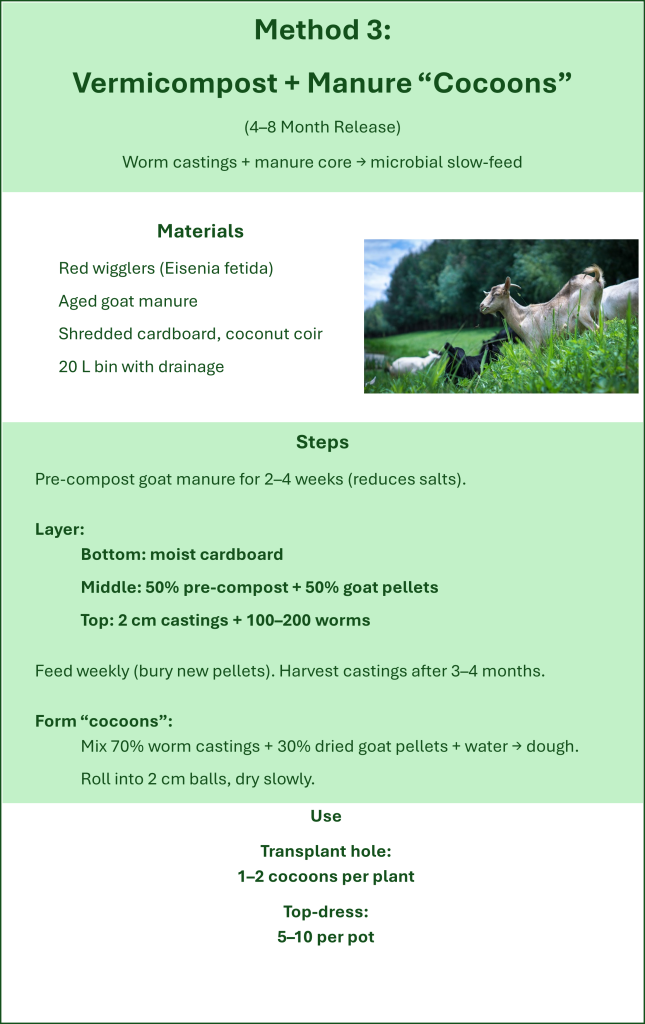
Below is a step-by-step guide to turning goat manure into true slow-release fertilizer—not just compost, but forms that release N-P-K over 3–12 months (vs. 2–6 weeks for raw compost).

These methods lock nutrients into stable organic matrices or physical pellets, reducing leaching and burn risk.

Slow-Release Boosters (Mix In)

Additive

Effect

Ratio

Rock phosphate

Slow P (6–12 mo)

5–10%

Wood ash (goat-safe)

Slow K

3–5%

Crushed eggshells

Ca + structure

2%

Mycorrhizal spores

Root symbiosis

1 g/kg

Common Mistakes to Avoid

Too wet → anaerobic stink (add browns).

Too dry → no decomposition (sprinkle water).

Using fresh manure → burns roots, contaminates food.

No carbon → ammonia loss and smell.

Storage & Shelf Life

Store in breathable sacks (burlap) in cool, dry shade.

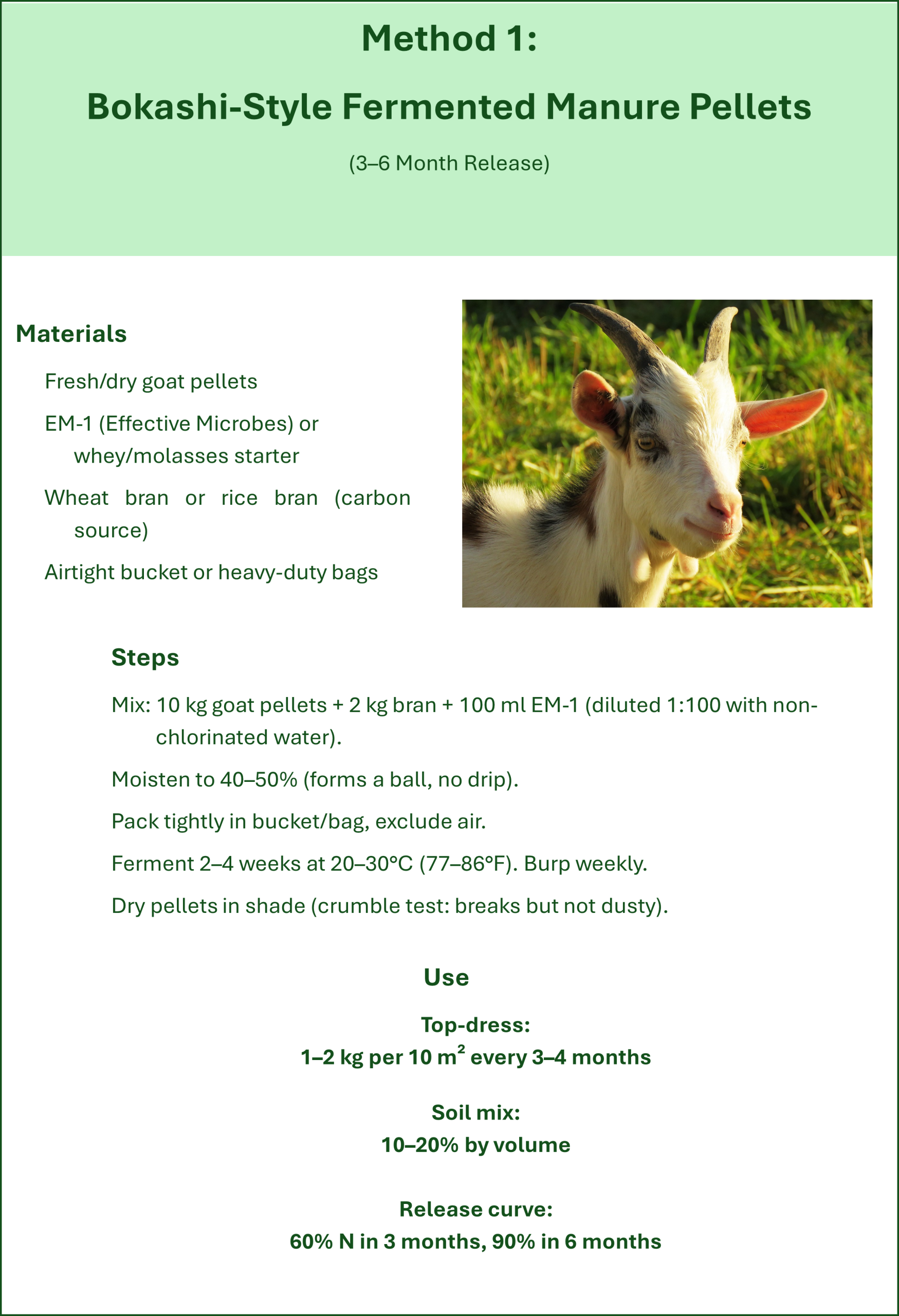
Shelf life: 12–24 months (pellets), 6–12 months (bokashi).

Quick Recipe: 10 kg Batch

(6-Month Release)

6 kg aged goat manure

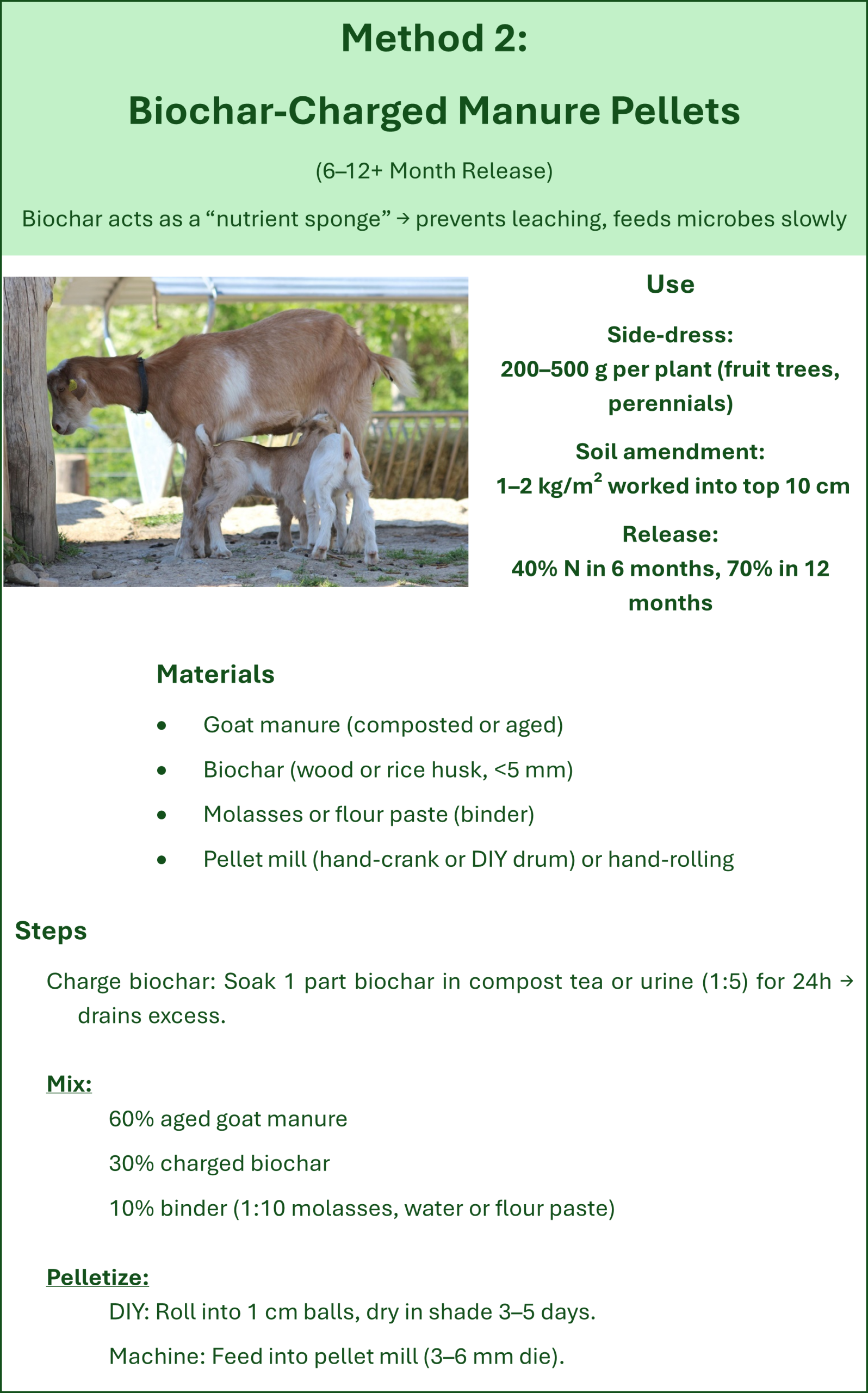
3 kg charged biochar

1 kg wheat bran + 100 ml molasses (binder)

→ Pelletize → Dry → Bag

Facebook Twitter Instagram Linkedin Youtube