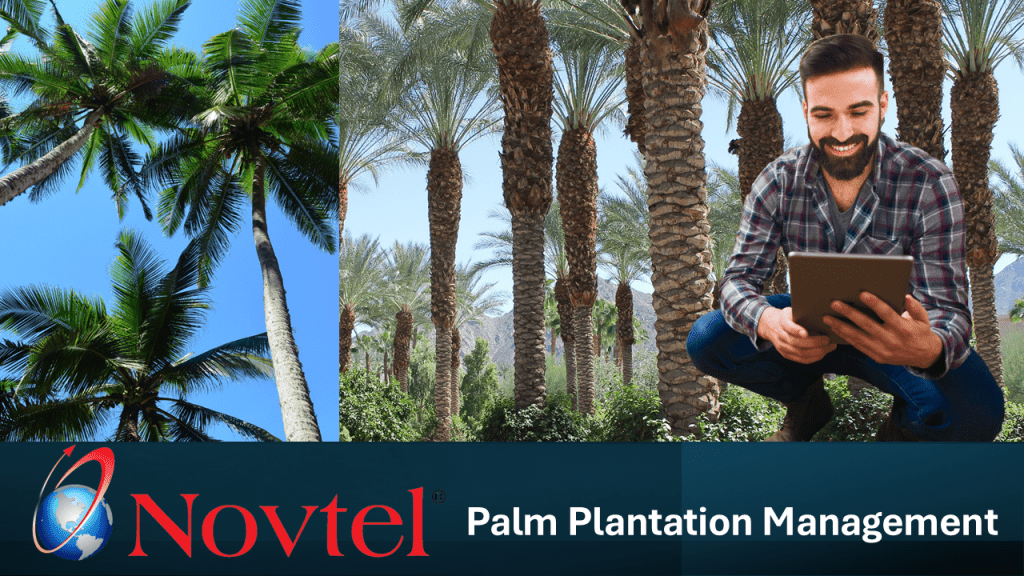
The Development of the Date Palm Plantation Management System: 

A World First for Growers

Date palm cultivation has long been a cornerstone of agricultural economies across the Middle East, North Africa, and increasingly in Southern Africa.

Yet, despite its importance, plantation management has remained largely manual, relying on traditional knowledge and fragmented record-keeping.

Emerging farmers often face challenges in monitoring growth cycles, irrigation schedules, pest control, and yield forecasting.

To address these challenges, innovators have developed the Date Palm Plantation Management System (DPMS)the world’s first computerized management system designed specifically for date palm growers.

This pioneering platform represents a major leap forward in agricultural technology, combining precision farming with digital transformation to empower farmers at every level.

The Date Palm Plantation Management System marks a historic milestone in agricultural innovation. As the world’s first computerized management system for date palm growers, it transforms centuries-old practices into a modern, data-driven enterprise.

For emerging farmers, this system is not just software — it is a pathway to sustainability, profitability, and global competitiveness.

By combining tradition with technology, DPMS ensures that the date palm industry thrives well into the future.

Why a Specialized System for Date Palms?

Unlike other crops, date palms have unique cultivation requirements:

Long growth cycles:

Trees take years to mature before producing commercial yields.

Labor-intensive pollination:

Male and female trees must be carefully managed.

Water sensitivity:

Irrigation must be precise to avoid root damage or reduced fruit quality.

Pest and disease management:

Red palm weevil and fungal infections can devastate plantations if not monitored.

Harvest logistics:

Dates ripen in stages, requiring careful scheduling and labor coordination.

Generic farm management software often fails to capture these complexities. DPMS was designed to fill this gap, offering tailored solutions for the unique lifecycle of date palms.

Key Features of the Date Palm Plantation Management System

Tree Registry

Digital catalog of every palm, including age, variety, and health status

Benefits to Farmers:
Enables precise monitoring and traceability

Irrigation Scheduling

Smart water management based on soil data and climate inputs

Benefit to Farmers:
Reduces waste and improves yield quality

Pollination Tracker

Records pollination activities and outcomes

Benefit to Farmers:
Ensures optimal fruit set and reduces labor errors

Pest & Disease Alerts

AI-driven detection and reporting

Benefit to Farmers:
Early intervention saves crops and reduces losses

Harvest Planning

Forecasting tools for ripening stages and labor allocation

Benefit to Farmers:
Improves efficiency and reduces waste

Financial Dashboard

Tracks costs, revenues, and profitability

Benefit to Farmers:
Helps farmers make informed business decisions

Mobile Access

Cloud-based system accessible via smartphones

Benefit to Farmers:
Empowers emerging farmers with on-the-go management

Development Journey

The system was conceived through collaboration between agricultural researchers, software developers, and local farming communities. The development process followed three major phases:

Research & Needs Assessment

  • Interviews with farmers highlighted gaps in record-keeping and resource management.

  • Agricultural experts mapped the biological lifecycle of date palms into digital workflows.

Prototype & Testing

  • Early versions were tested on small plantations to refine irrigation algorithms and pest alerts.

  • Feedback loops ensured the system was user-friendly for farmers with limited technical training.

Scaling & Integration

  • Cloud-based architecture was introduced to allow scalability across regions.
  • Integration with weather data and IoT sensors enhanced precision farming capabilities.

Impact on Emerging Farmers


The DPMS is more than just a technological innovation — it is a tool for empowerment.
Emerging farmers, who often lack access to advanced agronomic support, can now:

  • Reduce costs by optimizing water and labor usage.

  • Increase yields through better pollination and pest management.

  • Access markets with traceable, high-quality produce.

  • Build resilience against climate variability by using predictive analytics.

By digitizing plantation management, DPMS helps bridge the gap between traditional farming and modern agribusiness, ensuring that small-scale growers can compete in global markets.

Facebook Twitter Instagram Linkedin Youtube