
The Koingnaas Palms Academy:
A Vision for a Sustainable Palm Industry in South Africa
Author: Johan Grabe Founder and CEO of Koingnaas Palms
Koingnaas Palms is poised to address a critical gap in the South African agricultural sector through the establishment of a dedicated Palm Academy.
This initiative is born from the direct experience of the founders, who, upon entering the market, identified a significant scarcity of commercially available palm trees within the nation.
The current reliance on inconsistent seed propagation and the logistical and financial hurdles of importation have stifled the growth of a potentially lucrative palm industry.
The proposed academy aims to be a center of excellence, built on three core pillars: advanced nursery propagation, comprehensive education and training, and pioneering research and development.
This page outlines the vision, rationale, and detailed plans for the Koingnaas Palms Academy, an institution designed to empower South African farmers and establish a sustainable, self-sufficient, and profitable local palm industry.
The Imperative for a South African Palm Academy

The need for a specialized training and research institution for palm cultivation in South Africa is multifaceted, stemming from historical market gaps, biological propagation challenges, and the inherent limitations of international sourcing.
Addressing a National Scarcity
A foundational challenge for aspiring palm growers in South Africa has been the simple lack of available planting material. This market vacuum forces farmers to either abandon their ambitions or turn to unreliable propagation methods. The Koingnaas Palms Academy will directly address this by creating a consistent and accessible supply of high-quality palms, thereby removing the primary barrier to entry for new and expanding nurseries and commercial farms.
Overcoming Propagation Challenges
Traditional methods of palm propagation present significant risks and inefficiencies that deter investment and hinder productivity. The academy will provide a solution to these long-standing issues.
- The Unpredictability of Seed Propagation:
Propagating palms from seed, or sexual propagation, is fraught with uncertainty.
As a dioecious species, the date palm produces separate male and female plants. Seed-grown populations result in a roughly 50/50 split, yet the sex of a plant cannot be determined until it flowers, a process that can take up to seven years.
This long waiting period, combined with the fact that only female plants bear fruit, means half the land, resources, and time are invested in non-productive male trees. Furthermore, due to genetic variability (heterozygosity), seedling-derived palms are not true-to-type, often yielding fruit of inconsistent and inferior quality. - The Limitations of Offshoot Propagation:
While vegetative propagation using offshoots produces true-to-type clones, it is a slow and limited process.
A single mother palm produces only 20 to 30 offshoots in its early life, with only three or four being suitable for removal and planting each year.
This low multiplication rate makes it impossible to scale up production to meet commercial demand.
Koingnaas Palms will solve this by supplying palms cultivated through modern tissue culture techniques, guaranteeing they are female, true-to-type, and ready for plantation planning from day one.
The Unsustainability of Imports
Importing palms from established international markets is not a viable long-term strategy for building a robust domestic industry. The process is burdened by high costs, complex phytosanitary regulations, and significant stress on the plants during transport. This approach creates dependency and exposes South African farmers to global market volatility and supply chain disruptions. The academy will foster national self-sufficiency, insulating local growers from these external risks.
The Three Pillars of the Koingnaas Palms Academy
The academy will be structured around three integrated pillars designed to build a comprehensive ecosystem for the South African palm industry.
Pillar 1:
Advanced Nursery and Propagation

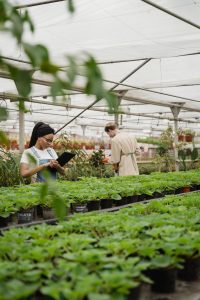
The cornerstone of the academy will be a state-of-the-art nursery centered on plant tissue culture.
This modern propagation technology, also known as micropropagation, offers a definitive solution to the challenges of traditional methods.
By cloning elite parent plants in a sterile laboratory environment, the academy can produce thousands of genetically identical, disease-free palms 2.
Key advantages include:
- Guaranteed Gender and Quality:
Farmers will receive only female, fruit-bearing palms with known genetic traits for high yield and superior quality. - Mass Production:
Tissue culture allows for the rapid, large-scale multiplication of plants, ensuring a consistent supply to meet market demand. - Disease-Free Stock:
The sterile process eliminates the risk of transmitting pests and diseases, providing farmers with healthy, robust planting material. - Accelerated Growth:
Tissue-cultured plants are often more vigorous and can establish themselves more quickly than traditionally propagated palms, leading to earlier harvests.
Pillar 2:
Education and Training

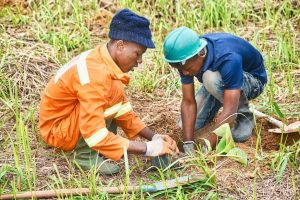
The academy will offer a comprehensive curriculum designed for South African farmers and growers, covering all aspects of modern palm cultivation.
The program will blend theoretical knowledge with practical, hands-on experience.
The curriculum will be modular, allowing participants to specialize or gain a holistic understanding of the entire value chain.
Pillar 3:
Research and Development

To ensure the long-term sustainability and competitiveness of the industry, the academy will house a dedicated research and development wing.
A primary focus will be on organic and sustainable fertilization practices. Research shows that the largest source of greenhouse gas emissions in palm cultivation comes from synthetic fertilizers. The academy will pioneer studies into alternatives, such as:
- Organic Fertilizers from Waste Streams:
Investigating the use of Empty Fruit Bunches (EFB), a major waste product of the palm industry, as a nutrient-rich organic fertilizer. This practice can reduce the need for synthetic fertilizers by over 75% 3. - Biochar Application:
Researching the production and application of biochar from palm waste. Biochar improves soil structure, enhances water and nutrient retention, and acts as a stable carbon sink, further reducing the industry’s environmental footprint.
This research will not only benefit the environment but also reduce input costs for farmers, making cultivation more profitable and sustainable.

Proposed Palm Cultivation Curriculum
The following outlines the proposed modular curriculum for the Koingnaas Palms Academy, drawing on best practices from leading agricultural training institutions.
Module 1:
Foundations of Palm Cultivation
Key Learning Areas:
Introduction to palm botany, economic significance, and the South African context.
Land suitability analysis, variety selection for local climates, and sustainable land preparation.
Module 2:
Advanced Nursery Management
Key Learning Areas:
Techniques for managing a modern palm nursery, including tissue culture acclimatization, root development, controlled-release fertilization, and transplanting schedules.
Module 3:
Soil and Nutrient Management
Key Learning Areas:
Principles of soil health, conducting soil analysis, and developing site-specific nutrient plans.
Focus on organic matter enhancement, cover cropping, and organic fertilization.
Module 4:
Integrated Pest & Disease Management
Key Learning Areas:
Early detection of pests and diseases, use of biological control agents, pheromone traps, and drone-based monitoring to minimize chemical interventions.
Module 5:
Water Management & Irrigation
Key Learning Areas:
Designing and implementing efficient irrigation systems (e.g., drip irrigation), rainwater harvesting techniques, and drainage management to prevent waterlogging.
Module 6:
Plantation Management & Pruning
Key Learning Areas:
Proper plantation layout, tree spacing, pruning techniques for optimal sun exposure and fruit development, and managing the plantation floor.
Module 7:
Harvesting & Post-Harvest Technology
Key Learning Areas:
Identifying optimal harvest maturity, using modern harvesting tools, and best practices for handling, sterilization, and processing of fresh fruit bunches to maintain quality.
Module 8:
Sustainability & Waste Valorization
Key Learning Areas:
Implementing eco-friendly practices, converting palm waste (POME, EFB) into valuable byproducts like biogas and organic mulch, and achieving sustainability certifications.
Module 9:
Technology in Palm Farming
Key Learning Areas:
Leveraging modern technology such as drones for mapping and health monitoring, precision agriculture tools for resource optimization, and data analytics for performance tracking.
Module 10:
Agribusiness & Market Development
Key Learning Areas:
Financial planning, budgeting, risk management, and developing strategies for marketing and selling palm products in local and international markets.
The establishment of the Koingnaas Palms Academy represents a pivotal opportunity to build a thriving, sustainable, and self-sufficient palm industry in South Africa.
By integrating advanced propagation techniques, comprehensive education, and forward-thinking research, the academy will empower a new generation of farmers, create economic opportunities, and position South Africa as a leader in modern, responsible agriculture.
This vision moves beyond simply planting trees; it is about cultivating an entire ecosystem of knowledge, innovation, and prosperity.