Turning chicken manure into true slow-release fertilizer

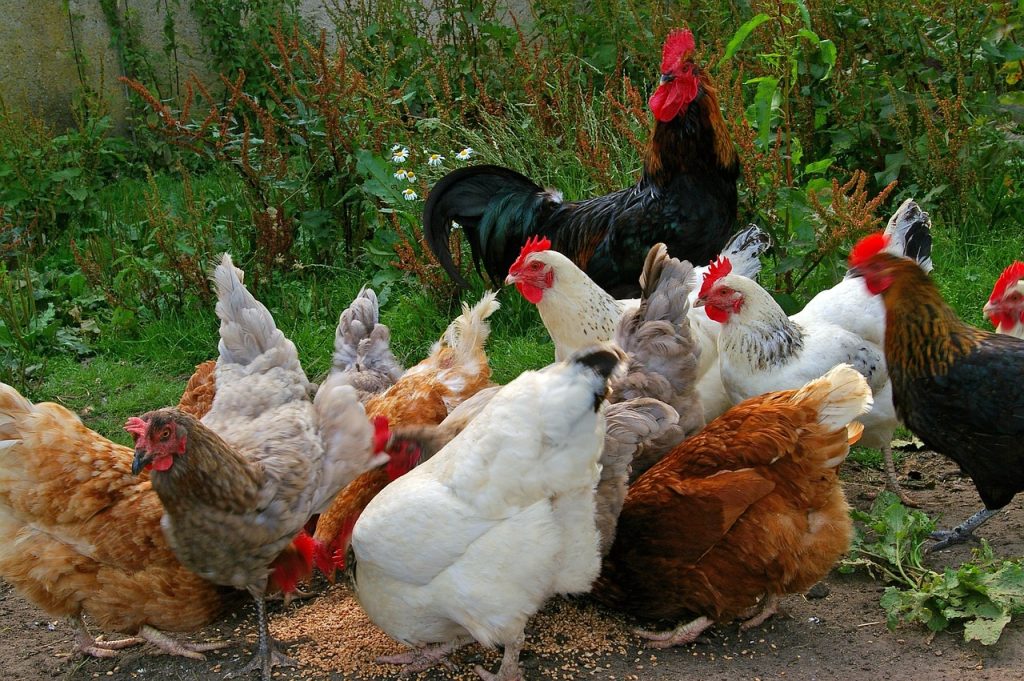
Image by Kerstin Riemer from Pixabay


Below is a step-by-step guide to turning chicken manure into true slow-release fertilizer (3–12+ month nutrient delivery).

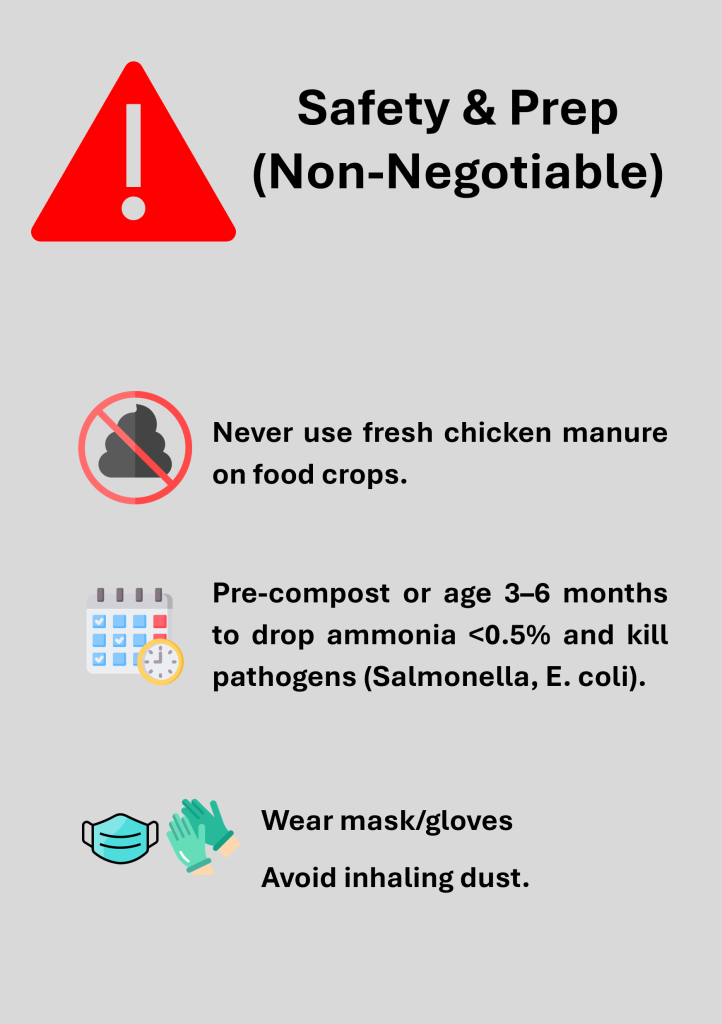
Chicken manure is hotter than goat (NPK ≈ 4–3–2 fresh, high salts/ammonia), so pre-composting or aging is mandatory to avoid burning plants or leaching N.

These methods lock nutrients into stable matrices (pellets, biochar sponges, worm cocoons) for gradual microbial release.

Method 1:

Bokashi-Fermented Chicken Pellets (3–6 Month Release)Anaerobic lacto-fermentation → preserves N, slows breakdown

Materials

  • Aged chicken manure (3+ months piled, no ammonia smell)
  • EM-1 or whey/molasses starter
  • Rice bran or wheat bran
  • Airtight bucket/bag

Steps

  1. Mix:
    • 10 kg aged chicken manure
    • 2 kg bran
    • 150 ml EM-1 (diluted 1:100)
  2. Moisten to 40% (forms ball, no drip).
  3. Pack airtight; ferment 3 weeks at 20–30°C.
  4. Dry in shade → crumbly pellets.

Use

  • Top-dress: 0.5–1 kg/10 m² every 3 months
  • Soil mix: 5–10% by volume

Method 2: Biochar-Charged Chicken Manure Pellets (6–12+ Month Release)

Biochar “sponge” → zero leaching, ultra-slow N

Materials

  • Pre-composted chicken manure (6 weeks hot pile)
  • Biochar (<3 mm, wood or rice husk)
  • Molasses or flour paste (binder)
  • Hand-roller or pellet mill

Steps

  1. Charge biochar:
    Soak 1 part biochar in compost tea (1:5) 48h → drain.

  2. Mix:
    • 50% pre-composted chicken manure
    • 40% charged biochar
    • 10% binder (molasses 1:10 with water)

  3. Pelletize:
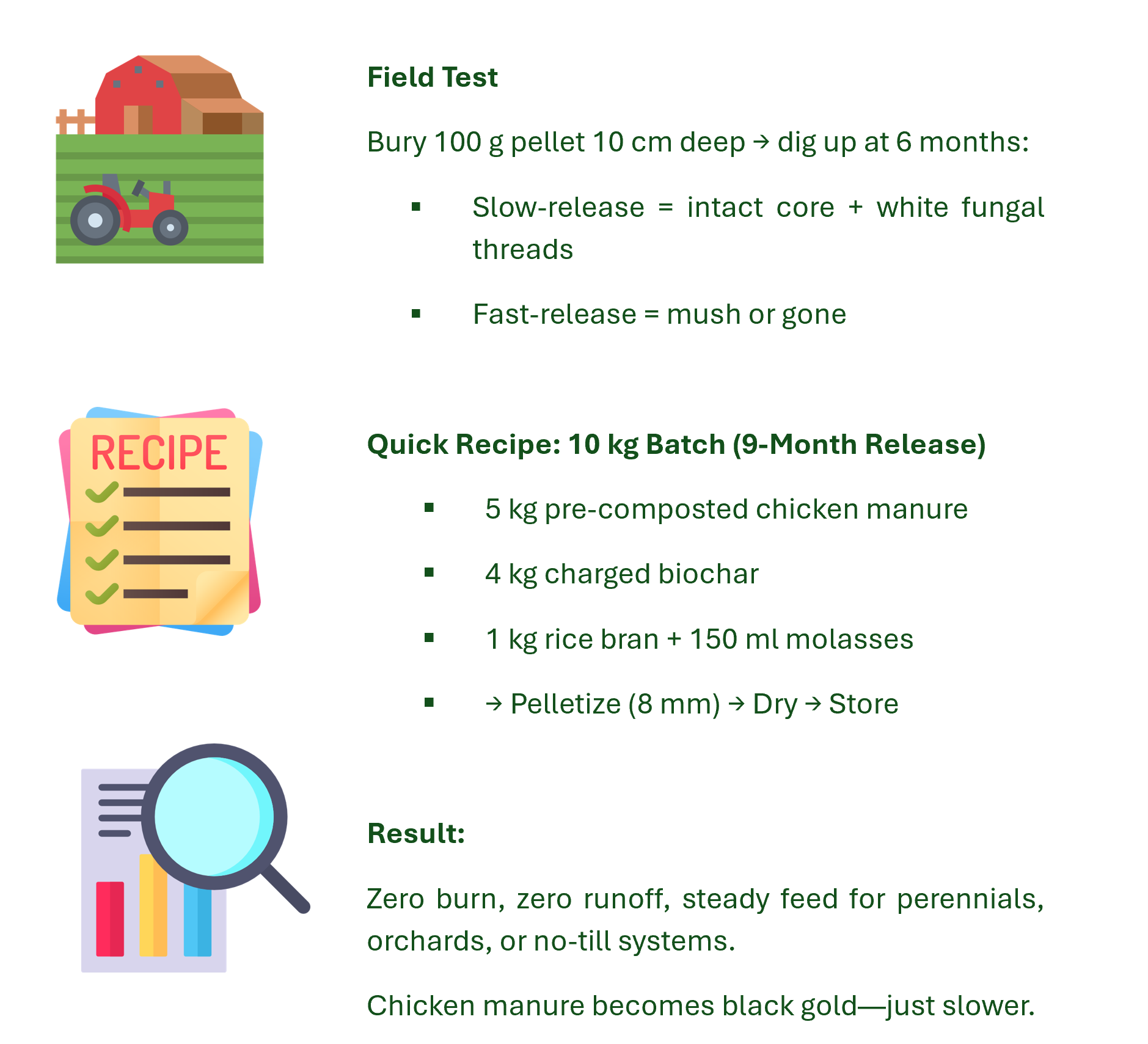
    • DIY: Roll into 8–10 mm balls, dry 5–7 days in shade.
    • Machine: 4–6 mm die.

  4. Cure 2 weeks.

Use

  • Fruit trees:
    300–600 g per tree, buried 10 cm

  • Rows:
    1 kg per 5 m

  • Release:
    30% N in 6 months, 65% in 12 months.

Method 3: Vermicompost “Cocoons” with Chicken Manure Core (4–8 Month Release)

Worm castings coat a nutrient-dense core

Materials

  • Red wigglers
  • Pre-composted chicken manure (hot-composted 6 weeks)
  • Cardboard/coir bedding
  • 20 L bin

Steps

  1. Feed worms 30% pre-composted chicken + 70% bedding for 2 months.
  2. Harvest castings.
  3. Form cocoons:
    • 60% worm castings
    • 30% dried chicken pellets
    • 10% water → dough
    • Roll into 2 cm balls, dry slowly.

Use

  • Transplant:
    1–2 per hole

  • Pots:
    3–5 per 20 L
Facebook Twitter Instagram Linkedin Youtube