
Date Cultivars by International Use
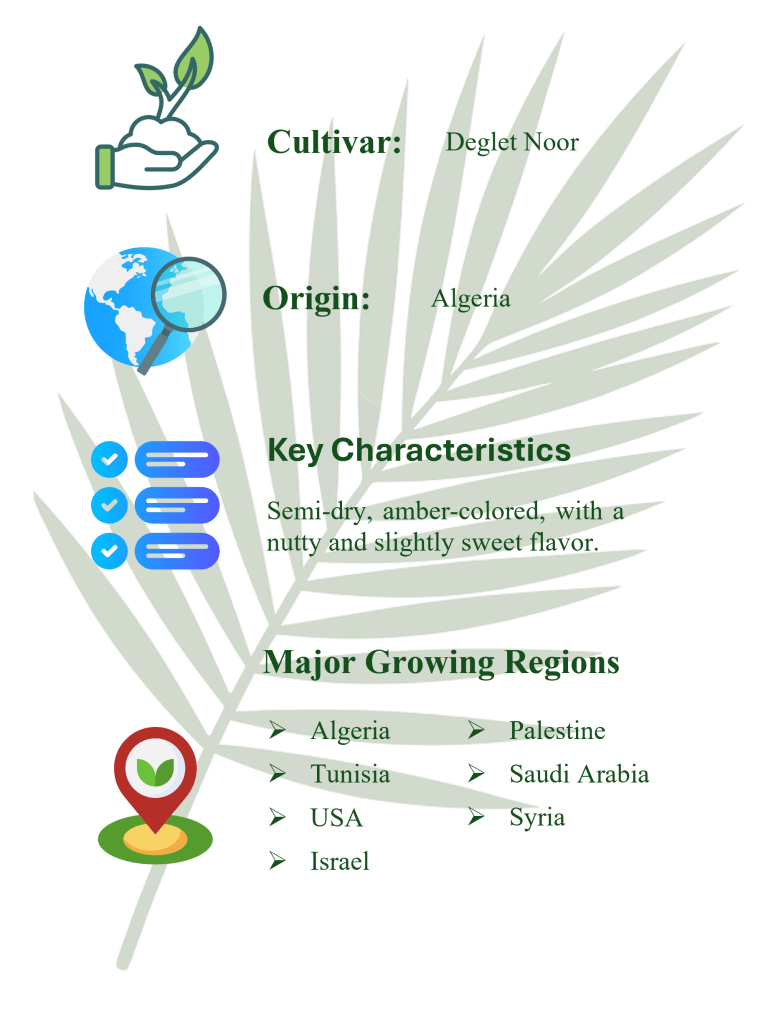
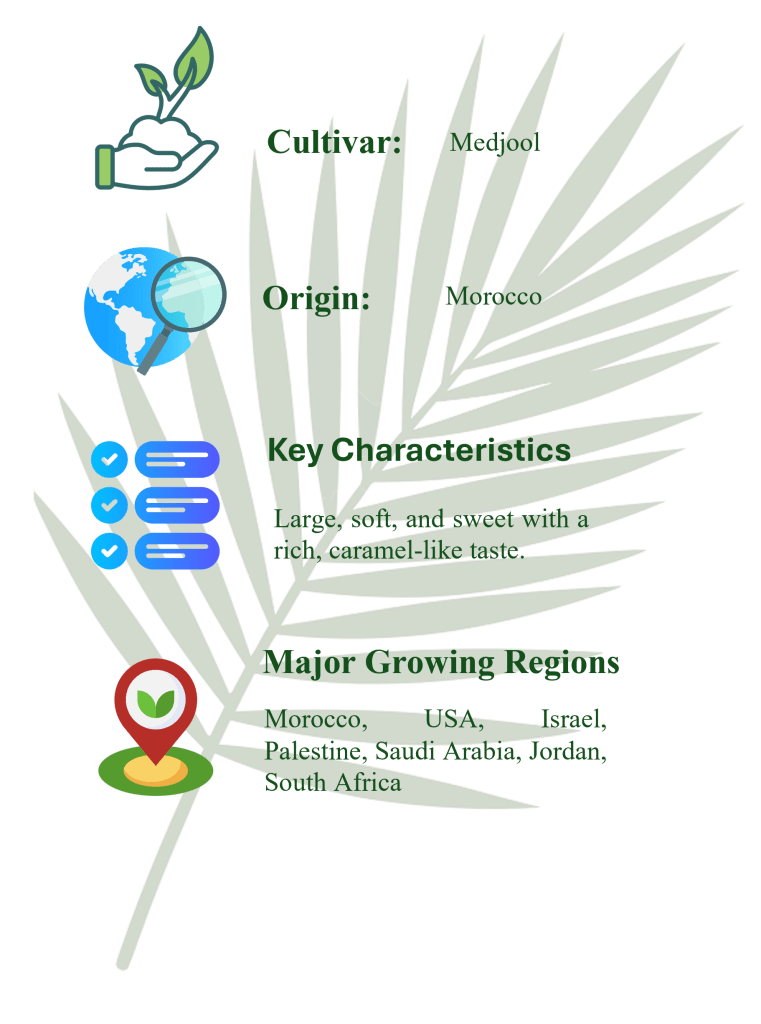
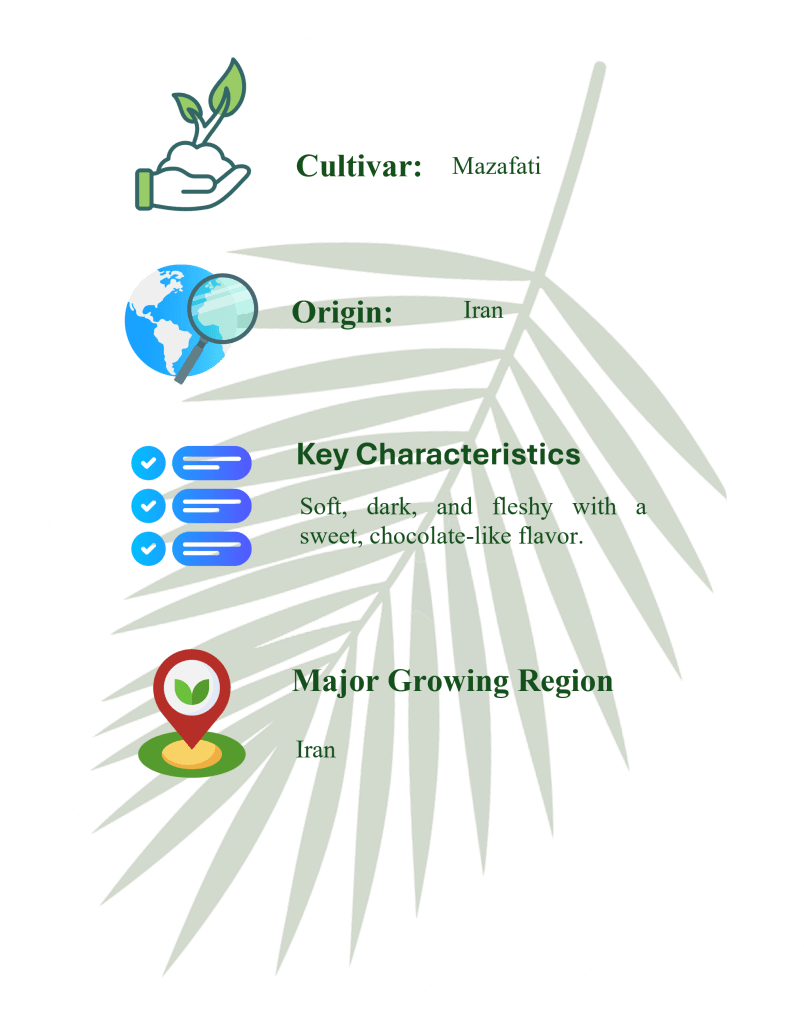
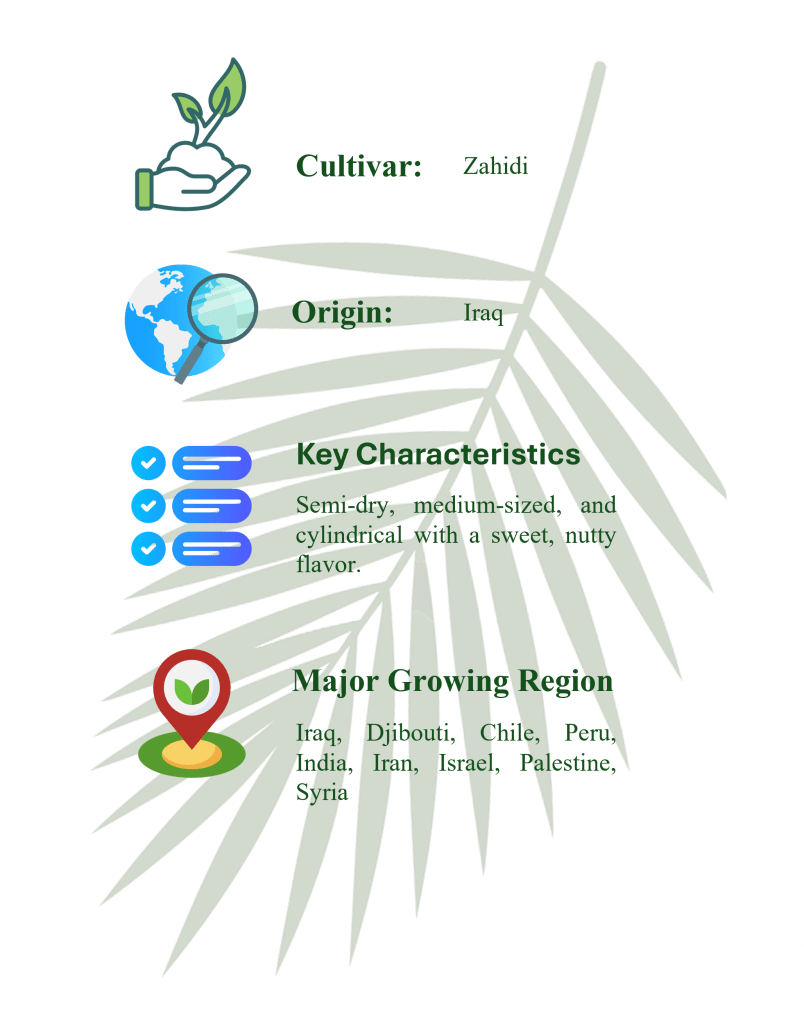
While there are over 6,000 date varieties worldwide, only a select few have achieved significant international recognition and commercial importance.
The most prominent cultivars are distinguished by their flavor, texture, and suitability for cultivation in various climates.
The following table lists the most renowned date cultivars in order of their international use and commercial importance.

Uses of the Date Palm Fruit and Tree
The date palm is a remarkably versatile plant, with nearly every part of it being utilized for culinary or practical purposes.
The uses are listed below in order of their general importance, starting with the most significant.
Date Fruit (Dates)
The primary and most valuable product of the date palm is its fruit.
Dates are consumed in various forms and are a staple food in many cultures.
- Direct Consumption:
Dates are most commonly consumed whole, either fresh or dried. Dried dates have a longer shelf life and are a concentrated source of energy, making them a vital food source. - Processed Products:
The fruit is processed into a variety of value-added products: - Date Syrup (Dibs):
A natural sweetener used in beverages, desserts, and as a topping. - Date Paste:
A versatile ingredient in baked goods, confectionery, and energy bars. - Date Sugar:
A granulated sweetener made from dried, ground dates. - Date Juice:
Consumed as a beverage or used as a base for other products. - Date Flour/Powder:
Used in baking to add sweetness and nutritional value.
Date Palm Tree
Beyond the fruit, the date palm tree itself provides a wealth of resources.
- Leaves (Fronds):
The leaves are used for weaving baskets, mats, and fans. They also serve as thatching for roofs and walls, providing shade and shelter. - Trunk:
The trunk provides timber for construction, used as beams, pillars, and rafters. The wood is also used to make furniture and, in some cases, as fuel. - Terminal Bud (Heart of Palm):
The tender growing point at the top of the trunk can be harvested and eaten as a delicacy, either raw in salads or cooked. - Seeds:
Though often discarded, date seeds can be roasted and ground into a coffee substitute or pressed to extract oil. They are also used as animal feed. - Sap:
The sap of the date palm can be tapped to produce a sweet beverage known as palm wine or can be boiled down to make palm sugar (jaggery).
Nutritional Value of Dates
Dates are a powerhouse of nutrition, providing a rich source of energy, fiber, vitamins, and minerals.
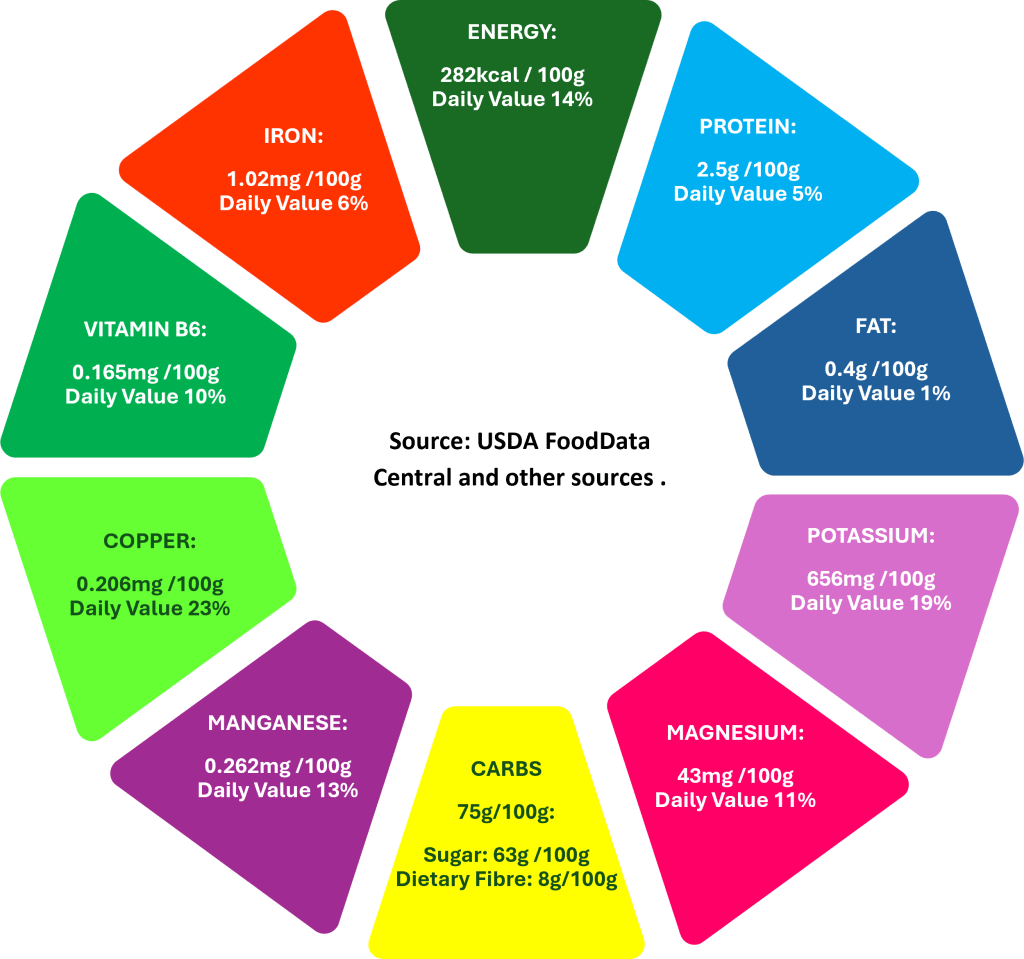
The nutritional composition can vary slightly between cultivars, but the following table provides a general overview of the nutritional value of 100 grams of Deglet Noor dates, a common variety.
Dates are particularly high in carbohydrates, primarily in the form of natural sugars (glucose, fructose, and sucrose), which makes them an excellent source of quick energy.
They are also a good source of dietary fiber, which aids in digestion and helps to regulate blood sugar levels. The glycemic index (GI) of dates is relatively low to medium, ranging from 38 to 71 depending on the variety, which means they do not cause a rapid spike in blood sugar levels compared to other sweet foods.
In addition to the macronutrients, dates contain a variety of beneficial bioactive compounds, including phenolic compounds, flavonoids, and carotenoids, which have antioxidant and anti-inflammatory properties.
Phoenix dactylifera is a plant of immense culinary and cultural importance.
From the internationally traded Medjool and Deglet Noor cultivars to the myriad of uses for its fruit and tree, the date palm is a vital resource. Its fruit, rich in nutrients and versatile in its applications, continues to be a cherished food source around the world, valued for both its taste and its health benefits.
References
[1] Chao, C. C. T., & Krueger, R. R. (2007). The Date Palm (Phoenix dactylifera L.): Overview of Biology, Uses, and Cultivation. HortScience, 42(5), 1077–1082.
[2] Al-Karmadi, A., et al. (2024). An Overview of Date (Phoenix dactylifera) Fruits as an Important Global Food Resource. Foods, 13(7), 1093.
[3] Wikipedia. (2024). List of date cultivars.
[4] TasteAtlas. (n.d.). Top 41 Dates in the World.
[5] Muñoz-Tebar, N., et al. (2023). Strategies for the Valorization of Date Fruit and Its Co-Products: A New Ingredient in the Development of Value-Added Foods. Foods, 12(7), 1456.
[6] Shanta, F. H., et al. (2021). Development of value added drinks from date palm juice (Phoenix dactylifera L.) with lemon and ginger. Journal of Agriculture and Food Research, 6, 100222.
[7] Ratin Khosh. (2020). 10 Date Paste Recipes: Irresistible Creations To Satisfy Your Sweet Tooth.
[8] Muñoz-Tebar, N., et al. (2023). Strategies for the Valorization of Date Fruit and Its Co-Products: A New Ingredient in the Development of Value-Added Foods. Foods, 12(7), 1456.
[9] Food and Agriculture Organization of the United Nations. (n.d.). Date palm products. Chapter 5.
[10] U.S. Department of Agriculture. (2019). FoodData Central: Dates, deglet noor.
[11] Dghaim, R., et al. (2021). The Mineral Composition of Date Palm Fruits (Phoenix dactylifera L.) under Low to High Salinity Irrigation. Molecules, 26(23), 7361.
[12] Wikipedia. (2024). Date palm.
[13] Al-Mssallem, M. Q., et al. (2011). Glycemic index of 13 varieties of dates. Annals of Saudi Medicine, 31(4), 367–372.
[14] Vayalil, P. K. (2012). Date fruits (Phoenix dactylifera Linn): an emerging medicinal food. Critical Reviews in Food Science and Nutrition, 52(3), 249–271.