
The Royal Palm Bug (Xylastodoris luteolus): A Comprehensive Guide to Damage and Control
Author: Johan Grabe Founder and Chairman of Koingnaas Palms
The Royal Palm Bug, Xylastodoris luteolus, is a small, inconspicuous insect that poses a significant aesthetic threat to one of Florida’s most iconic trees, the Cuban royal palm (Roystonea regia).
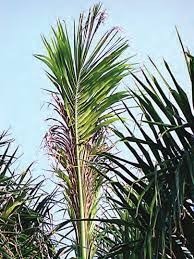
This tiny pest, a specialist that feeds exclusively on the new fronds of royal palms, can cause extensive damage, turning lush, green canopies into unsightly, tattered displays.
While rarely fatal to the palm, the damage can significantly detract from the landscape’s beauty and the palm’s overall health.
This article provides a detailed overview of the Royal Palm Bug, the damage it inflicts, and the most effective methods for its control, drawing upon extensive research from leading entomological sources.
Biology and Life Cycle
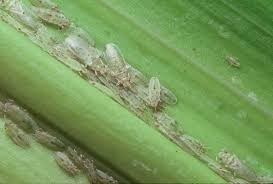
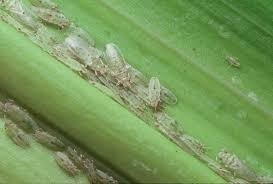
The Royal Palm Bug is a member of the Thaumastocoridae family and is the only representative of this family in North America 1. Adults are a mere 2.5 mm in length, with a pale, yellowish-green, flattened body and distinctive red eyes 1. Their life cycle is closely synchronized with the growth of their host palm.
In the spring, female bugs lay single, pale amber eggs within the protective folds of newly emerging palm leaflets. Each female can lay up to 15 eggs, which hatch in approximately eight to nine days. The nymphs, which resemble smaller, wingless adults, go through five instars over a period of about a month before reaching maturity 1 2. This rapid development means that a new generation of bugs is ready to attack each new leaf as it emerges.
Feature | Description |
Adult Size | 2.5 mm |
Color | Pale yellow-green with red eyes |
Egg | Pale amber, 5 mm long, laid in new fronds |
Nymphs | 5 instars, similar to adults but wingless |
Life Cycle | ~28 days from egg to adult |
Damage to Royal Palms
The feeding habits of the Royal Palm Bug are the direct cause of the damage seen on infested palms.
Both nymphs and adults feed on the tender, newly unfurled spear leaf and expanding fronds by sucking the contents of the plant cells.
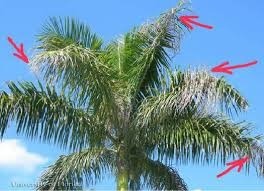
Initial signs of an infestation appear as small, scattered yellow spots on the lower surfaces of the leaflets. As the bug population increases—with as many as 300 bugs observed on a single leaflet—the damage becomes more severe.
The yellow spots coalesce into brownish streaks, and the leaflets begin to wilt. Over time, the damaged fronds become gray, tattered, and necrotic, significantly reducing the palm’s aesthetic appeal and potentially its photosynthetic ability.
While the Royal Palm Bug is present year-round, its activity and the resulting damage are most severe in the spring and early summer.
The pest seems to have an irregular cyclical pattern of abundance, with populations building to extremely high levels in certain years, leading to widespread and severe damage.
Pest Management and Control
Effective management of the Royal Palm Bug is crucial for maintaining the health and beauty of royal palms.
While natural predators like spiders exist, they are not considered a reliable method for controlling significant infestations.
Therefore, chemical control remains the primary and most effective solution.
Challenges with Traditional Methods
Foliar applications of contact insecticides present significant challenges. The height of mature royal palms makes it difficult to achieve adequate spray coverage, and concerns about insecticide drift in urban environments make this method impractical and environmentally undesirable.
Systemic Insecticides: The Preferred Solution
The most effective and environmentally sound method for controlling the Royal Palm Bug is the use of soil-applied systemic insecticides, particularly neonicotinoids. These insecticides are applied as a drench to the soil at the base of the palm, where they are absorbed by the roots and transported throughout the plant’s vascular system, reaching the new fronds where the bugs feed.
This method eliminates insecticide drift and minimizes exposure to non-target organisms.
Several studies have demonstrated the high efficacy of neonicotinoid insecticides such as imidacloprid, clothianidin, and dinotefuran in controlling Royal Palm Bug populations.
Research has shown that a single soil drench can provide complete control for several months.
Insecticide (Active Ingredient):
Imidacloprid
Formulation:
Merit® 2F, CoreTect™ tablets
Efficacy:
Excellent
Speed of Uptake:
Moderate
Insecticide (Active Ingredient):
Clothianidin
Formulation:
Arena® 50 WDG
Efficacy:
Excellent
Speed of Uptake:
Slow
Insecticide (Active Ingredient):
Dinotefuran
Formulation:
Safari® 20 SG, Safari® 2G
Efficacy:
Excellent
Speed of Uptake:
Fast
Dinotefuran has been shown to be the most rapidly translocated of these insecticides due to its higher water solubility and lower soil binding properties, making it a good choice for rapid control of existing infestations.
For preventative treatment, imidacloprid has a long history of effective use and can be applied before damage becomes apparent.
Application Recommendations
For optimal results, systemic insecticides should be applied at the first sign of an infestation.
The following steps outline the proper application procedure for a soil drench:
- Clear away any mulch or turf from the base of the palm trunk.
- If the soil is dry, pre-wet the area with about five gallons of water.
- Mix the insecticide with water according to the product label instructions.
- Pour the mixture slowly and evenly in a band around the base of the trunk.
The Royal Palm Bug, Xylastodoris luteolus, is a specialized pest that can cause significant aesthetic damage to royal palms.
Understanding its life cycle and the symptoms of infestation is key to timely and effective management.
While natural control agents exist, they are often insufficient to prevent widespread damage during outbreak years.
The use of soil-applied systemic neonicotinoid insecticides has proven to be the most effective, reliable, and environmentally responsible method for controlling this pest, ensuring that these majestic palms remain a beautiful and iconic feature of the landscape.
References