
Spider Mites:
The Tiny Terrors Ravaging Palm Fronds
pider mites, those minuscule arachnids no larger than a grain of salt, are stealthy invaders that can turn lush palm canopies into brittle, faded shadows.
Belonging to the family Tetranychidae, these pests—often mistaken for insects—thrive in dry, dusty conditions, sucking the vitality from over 200 plant species, with palms being prime targets.
While true spider mites like the red spider mite (Tetranychus urticae) and two-spotted spider mite are common culprits on indoor ornamentals, the notorious red palm mite (Raoiella indica, a false spider mite from the Tenuipalpidae family) has surged as a global threat since its 2004 invasion of the Caribbean, devastating coconut plantations and spreading to Florida, Mexico, and beyond. Capable of reducing coconut yields by 50% or more, these mites have cost tropical economies millions, with symptoms often confused for lethal yellowing disease.
This article explores their biology, how to detect these hidden hordes, the devastating damage they inflict on palms like coconut (Cocos nucifera), date (Phoenix dactylifera), and oil palm (Elaeis guineensis), and proven strategies to evict them.
Understanding Spider Mites on Palms
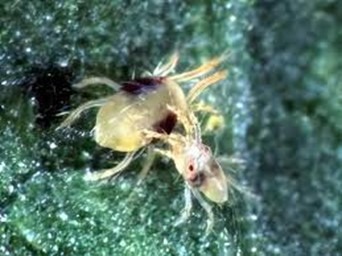
Spider mites are not insects but relatives of spiders and ticks, measuring just 0.3-0.5 mm (1/50 inch) with eight legs and oval bodies in shades of red, yellow, green, or brown—often camouflaged against fronds.
Females, the primary reproducers, lay 20-100 eggs per cycle on leaf undersides, hatching into larvae that mature in 4-5 days under warm (70-90°F/21-32°C), low-humidity conditions.
A single female can spawn 10+ generations yearly, exploding populations from dozens to millions in weeks.
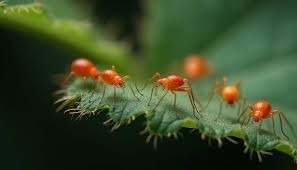
True spider mites spin fine silk webs for protection and dispersal (via wind), while R. indica lacks webbing but clusters in red colonies of 100-300 per leaflet.Palms’ broad, pinnate fronds provide ideal real estate: T. urticae plagues indoor varieties like majesty (Ravenea rivularis), areca (Dypsis lutescens), and parlor palms (Chamaedorea elegans), thriving in heated homes during winter.
Outdoors, R. indica targets coconut, date, oil, and areca palms, favoring sunny, arid tropics.
In Florida, it’s hit 20+ palm species, with outbreaks peaking in dry seasons. Predators like ladybugs, lacewings, and predatory mites (Phytoseiulus persimilis) curb numbers naturally, but indoors or in monocultures, ants and dust tip the scales. Stress from drought, over-fertilization, or poor airflow accelerates infestations, turning resilient palms into mite magnets.
Detecting Spider Mites:
Unmasking the Invisible Assault
These specks evade the naked eye, often spotted only after damage mounts. Early detection hinges on routine checks, as colonies double daily.
Visual Indicators
Stippling and Mottling:
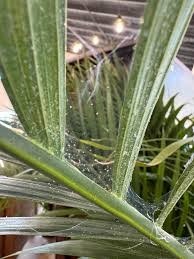
Tiny white or yellow speckles (from cell puncture) on upper leaf surfaces, progressing to bronze or gray patches—hallmarks of sap extraction.
On coconut, small yellow spots expand into chlorotic streaks along veins.
Webbing:
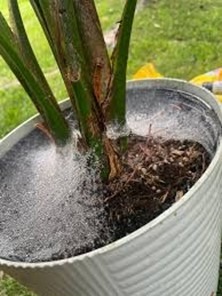
Fine, dusty silk on undersides or stems for true spider mites; absent in R. indica, which leaves white shed skins amid red clusters.
Leaf Distress:
Yellowing, curling, or bronzing from tips inward; severe cases show necrotic (dead) tissue or frond drop. Coconut lower leaves yellow extensively; date palms get frizzled edges.
Mite Sightings:
Shake fronds over white paper—pepper-like specks or tiny red/green dots signal active mites. Use a 10x hand lens for confirmation; R. indica appears as vivid red dots with droplets.
Inspection Tips
Examine weekly:
Focus on lower/underside fronds with a magnifying glass or phone lens, especially in dry indoor spots or drought-stressed groves.
Tap-test over paper; mist to reveal movement.
Outdoors, scout coconut husks for R. indica (though it targets foliage more).
Differentiate from nutrient deficiency (uniform yellowing) or fungal issues (no specks).
In high-risk areas like Florida, report R. indica to extension services for biocontrol releases.
The Damage Caused by Spider Mites to Palms
Mites pierce mesophyll cells with stylets, injecting saliva that disrupts chlorophyll and water balance, causing rapid decline.
Low infestations (<50 mites/leaf) are cosmetic; thresholds of 100+ trigger collapse.
Types of Damage
Feeding Scars:
Stippling reduces photosynthesis by 20-50%, leading to mottled, silvery leaves that curl and drop prematurely.
On majesty palms, fronds yellow from edges; areca shows stunted spears.
Severe Defoliation:
R. indica on coconuts causes chlorotic patches, necrosis, and 50%+ lower frond death, mimicking lethal yellowing but without nut drop.
Date palms suffer frizzling and reduced vigor; oil palms see bunch abortion.
Physiological and Yield Losses:
Sap drain stunts growth, weakens meristems, and invites fungi like sooty mold on honeydew (rare in mites). Coconut yields plummet 25-50%; ornamentals lose aesthetic value, with indoor palms dying in months if untreated.
Secondary Risks:
Weakened palms fall to weevils or storms; R. indica outbreaks in the Caribbean killed thousands of trees, costing $10M+ in replanting.
Young or stressed palms perish fastest, but mature ones rebound if caught early.
Mitigation and Control Strategies
IPM prioritizes prevention: Boost humidity (60%+), dust foliage, and quarantine new plants.
No silver bullet exists—rotate tactics to thwart resistance.
Cultural Practices
Increase humidity via misting/humidifiers; hose fronds weekly to dislodge mites. Ensure even watering and airflow; avoid drought stress.
Effectiveness:
High (preventive)
Ideal for indoors; reduces T. urticae by 80%. For R. indica, prune lower fronds.
Mechanical Removal
Blast with strong water stream; wipe leaves with alcohol-soaked cloths (1:3 alcohol:water). Vacuum webs gently.
Effectiveness:
High for light infestations
Repeat 2-3x/week; test alcohol to avoid burn. Effective first step for all palms.
Biological Controls
Release predatory mites (P. persimilis) or ladybugs; for R. indica, deploy Amblyseius tamatavensis wasps.
Effectiveness:
Moderate to high
Eats 5-20 mites/day; best in greenhouses. Avoid soaps that harm predators.
Chemical Options
Apply insecticidal soaps, neem oil (2%), or miticides (abamectin, spiromesifen) every 7-10 days; sulfur for R. indica.
Effectiveness:
Moderate (variable)
Targets eggs/larvae; apply evenings to prevent scorch. Rotate; not for edibles without labels.
For outbreaks, consult UF/IFAS or local extensions; R. indica trials show 90% control with integrated approaches.
Fortify Your Palms Against Mite MayhemSpider mites may be pint-sized, but their sap-sucking spree can strip palms of their tropical splendor, from speckled fronds to barren crowns.
By tapping leaves for telltale specks, hosing vigorously, and enlisting nature’s assassins, you can halt the havoc before it claims your coconut grove or living room majesty.
Proactive care—humid havens and vigilant eyes—keeps these arachnids at bay, ensuring palms sway strong.
Spot red clusters? Act fast and seek expert aid to protect these enduring icons of paradise.
References
costafarms.com
https://costafarms.com/blogs/get-growing/plant-pests-101-spider-mites
nozzlenolen.com
https://nozzlenolen.com/blog/bugs-on-palm-trees-most-common-pests-treatment-nn/
plantix.net
https://plantix.net/en/library/plant-diseases/500016/red-palm-mite/
greg.app
https://greg.app/bugs-on-majesty-palm/
gardenguides.com
https://www.gardenguides.com/105507-insects-coconut-trees.html
link.springer.com