
Leaf Skeletonizers and Defoliators
These pests, primarily the larval stages of moths and beetles, feed on the foliage of palms, which can lead to significant defoliation and a decline in the palm’s health and aesthetic appeal.
The Palm Leaf Skeletonizer:
Detecting and Managing Damage to Your PalmsPalms are iconic fixtures in landscapes across the southern United States, evoking images of tropical paradises.
However, these elegant trees can fall victim to subtle yet persistent pests like the palm leaf skeletonizer (Homaledra sabalella), a native moth whose larvae wreak havoc on fronds.
Native to Florida and parts of the Caribbean, this pest has been documented since the early 20th century as a significant threat to palm health, particularly in humid, subtropical environments.
While it rarely kills mature palms, its feeding activity can lead to unsightly defoliation and reduced vigor, especially in stressed or young trees.
In this article, we’ll explore the biology of H. sabalella, the telltale signs of infestation, the specific damage it inflicts on palms, and practical strategies for detection and mitigation.
Understanding the Palm Leaf Skeletonizer
Homaledra sabalella, commonly known as the palm leaf skeletonizer, belongs to the moth family Pterolonchidae (formerly classified under Coleophoridae).
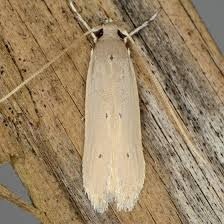
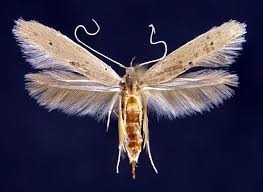
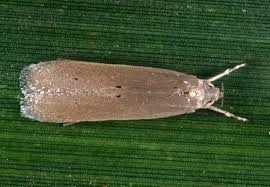
Adults are small, inconspicuous moths with a wingspan of about 16 mm (0.63 inches) and a body length of roughly 6.5 mm (0.26 inches). They sport a silvery light brown or beige coloration, accented by a black spot on the thorax and two black spots on each forewing, making them blend seamlessly into palm fronds at night when they’re active.
These moths live only 3 to 10 days and do not feed; their sole purpose is reproduction.
The life cycle unfolds over several generations per year, typically spanning eggs, larvae (caterpillars), pupae, and adults.
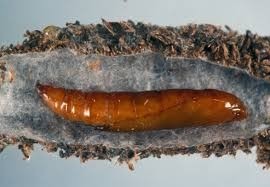
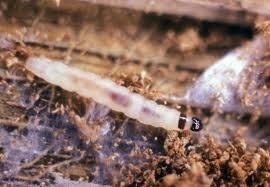
Females lay eggs on unfolding palm leaves, often covering them with a protective brown papery material. Upon hatching, the pale green to yellowish-white larvae—growing up to 16 mm (5/8 inch) long—begin their destructive work. These cylindrical caterpillars mine into the leaf tissue, creating silken tubes interlaced with their frass (excrement), which serves as both shelter and camouflage.
Pupation occurs within these tubes on the leaf surface, and the cycle repeats, with peak activity in warmer months.
This pest targets a variety of palms, including native species like cabbage palmetto (Sabal palmetto) and Puerto Rico hat palm (Sabal causiarum), as well as ornamentals such as Canary Island date palm (Phoenix canariensis), coconut (Cocos nucifera), Chinese fan palm (Livistona chinensis), and Washingtonia species.
Fan palms are particularly vulnerable, though outbreaks have been noted on feather-leaved varieties like coconut in Florida since the mid-1990s.
Interestingly, research suggests that populations on coconut palms may represent a cryptic invasive species, genetically distinct from those on native sabal palms, though they appear identical.
Detecting the Palm Leaf Skeletonizer:
Early Signs of Infestation
Early detection is key to minimizing damage, as larvae are well-protected within their frass-laden webs, making later interventions challenging.
Infestations often start subtly on mid-canopy or older leaves, progressing upward if unchecked. Here’s how to spot them:
Visual Indicators
Frass Deposits:
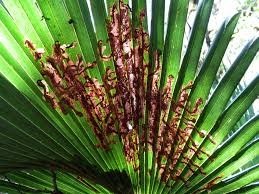
The most reliable early sign is fine, sawdust-like frass on the undersides of leaves, resembling brown dust or granules.
As larvae feed, this accumulates into dark brown tubes or enlarged splotches up to several inches long, often covering damaged areas like irregular “boots” or webbing.
Skeletonized Leaves:
Look for translucent, necrotic blotches where only the tough veins and midribs remain, giving fronds a lacy, “skeletonized” appearance.Yellowish speckles or blotches may appear first, escalating to full leaflet discoloration or browning.
Webbing and Tubes:
Silken mats mixed with frass form protective galleries along leaf undersides or edges. Gently brushing these away reveals the pale larvae inside.
Adult Moths:
Though nocturnal and elusive, silvery-brown moths with black wing spots may be visible at dusk near infested palms.
Inspection Tips
Conduct routine checks every 1-2 weeks during spring through fall, focusing on the undersides of lower to mid-fronds.
Use a strong flashlight for nighttime scouting of adults or larvae.
Healthy palms tolerate low-level infestations, but multiple fronds with heavy frass signal a problem.
If you’re in a high-risk area like Florida, consult local extension services for confirmation—misidentifying damage from other skeletonizers (e.g., sawfly larvae) is common.
The Damage Caused by the Palm Leaf Skeletonizer
The larvae’s rasping mouthparts scrape away the soft mesophyll tissue between veins, sparing only the fibrous veins—hence the “skeletonizer” moniker.
This feeding typically targets mature fronds, starting on the lower leaf surface and expanding to both sides.
Types of Damage
Aesthetic Harm:
The primary impact is cosmetic. Skeletonized areas brown out, leading to ragged, unsightly fronds that detract from landscape appeal.
In severe cases, entire leaves yellow and wither, giving palms a sparse, unhealthy look.
Physiological Stress:
Heavy defoliation reduces photosynthesis, weakening the palm’s ability to produce energy. This can stunt growth in juveniles or exacerbate issues in stressed trees (e.g., those drought-affected or nutrient-deficient).
Outbreaks have historically caused “serious damage” in Florida, particularly to commercial and ornamental plantings.
Secondary Risks:
Exposed vascular tissue invites fungal infections or attracts other pests. Frass buildup can also promote sooty mold growth.
Mature, vigorous palms rarely succumb, but repeated infestations over multiple generations (up to several per year) can lead to cumulative decline.
Coconut palms saw notable outbreaks in the 1990s, though native sabal species showed resilience.
Mitigation and Control Strategies
While H. sabalella has natural enemies like parasitic wasps, tachinid flies, and ground beetles that often regulate populations, proactive management is essential for landscapes.
Focus on cultural, mechanical, and biological methods before chemicals, as insecticides struggle to penetrate frass barriers.
Cultural Practices
Maintain palm health with proper irrigation, balanced fertilization (e.g., slow-release NPK), and mulching to boost resilience.
Effectiveness:
High (preventive)
Stressed palms are more susceptible. Aim for consistent moisture without waterlogging.
Mechanical Removal
Prune infested fronds (limit to <20% of canopy), bag securely, and burn or dispose off-site. Use a high-pressure hose to dislodge larvae and frass
Effectiveness:
High for localized issues.
Ideal for early detection; repeat as needed. Avoid over-pruning to preserve food reserves.
Biological Controls
Encourage natural predators by avoiding broad-spectrum pesticides. Introduce or conserve parasitoids if available.
Effectiveness:
Moderate to high
Effective in balanced ecosystems; monitor for tachinid flies and wasps.
Chemical Options
Apply Bacillus thuringiensis (Bt) like Dipel DF, neem oil, or carbaryl (Sevin) to foliage after pruning. Bifenthrin for residual control.
Effectiveness:
Variable (low to moderate)
Target young larvae; reapply every 7-14 days. Not always reliable due to webbing.
Follow label rates and local regulations.
For severe outbreaks affecting multiple trees, integrated pest management (IPM) combining these approaches yields the best results.
Ongoing research by institutions like the University of Florida explores targeted options, including potential pheromones for monitoring.
Safeguarding Your Palms
The palm leaf skeletonizer may seem like a minor nuisance, but its aesthetic and physiological toll can transform a thriving palm into an eyesore.
By staying vigilant for frass, webbing, and skeletonized fronds—and responding with timely pruning and cultural care—you can keep infestations in check.
Healthy palms not only withstand H. sabalella but also support the beneficial insects that keep it at bay.
If damage persists, reach out to your local extension agent for tailored advice.
With proactive detection and management, your palms can continue to be the crown jewels of your landscape.
References:
Forestpests.org
https://www.forestpests.org/vd/8582.html
Wikipedia.org
https://en.wikipedia.org/wiki/Homaledra_sabalella
content.ces.ncsu.edu
https://content.ces.ncsu.edu/palm-leaf-skeletonizer
entnemdept.ufl.edu