
The Giant Palm Borer (Dinapate wrighti):
A Comprehensive Report
Author: Manus AI
Date: November 20, 2025
The Giant Palm Borer, Dinapate wrighti, is a large and conspicuous beetle that inhabits the desert regions of North America.
As its name suggests, this insect has a close relationship with palm trees, particularly the California fan palm.
While it can be a destructive pest, its role in the ecosystem is more complex than that of a simple destroyer of trees.
This report provides a comprehensive overview of the Giant Palm Borer, covering its biology, behavior, distribution, the damage it causes, and strategies for its management.
Taxonomy and Identification
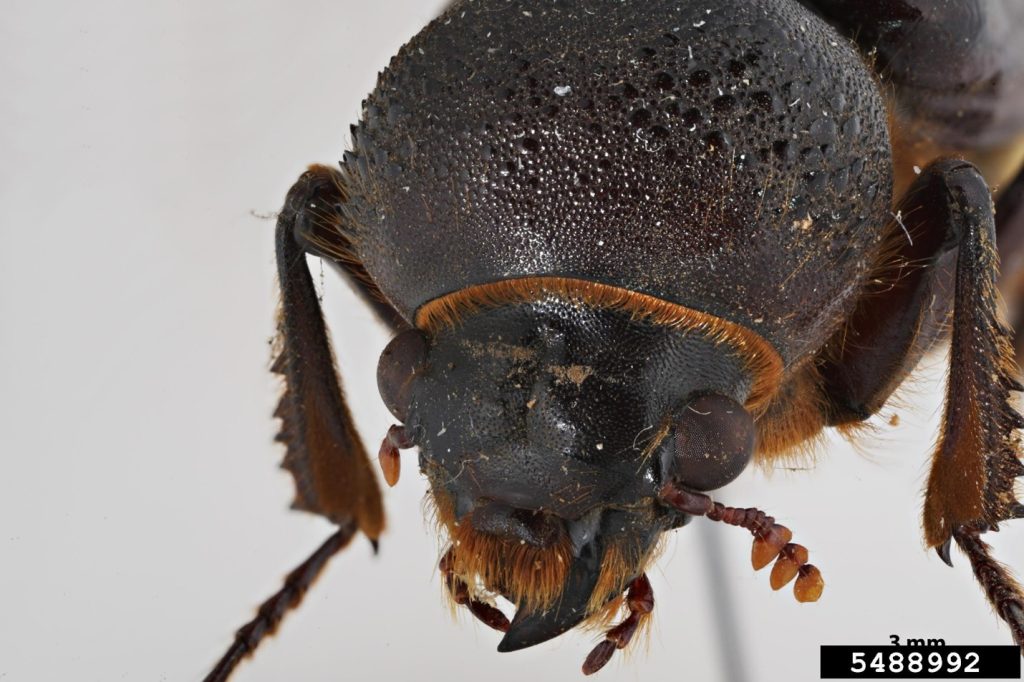
Adults are typically blackish to dark reddish-brown, reaching up to 2 inches (5 cm) in length.
A key identifying feature is the head, which is oriented downwards and not visible from above, giving the beetle a bulbous appearance from a dorsal view.
Larvae are large, C-shaped grubs that can grow up to 2.5 inches (6.4 cm) long. They are yellowish-white and are found tunneling within the trunks of palm trees.
The Giant Palm Borer is the largest known species in the family Bostrichidae, commonly known as the horned powder-post beetles.
Its taxonomic classification is as follows:
Kingdom: Animalia
Phylum: Arthropoda
Class: Insecta
Order: Coleoptera
Family: Bostrichida
Genus: Dinapate
Species: wrighti
Distribution and Habitat
Dinapate wrighti is native to the arid regions of the southwestern United States and northern Mexico.
Its primary habitat is the Colorado Desert of southern California, with a significant population in the Coachella Valley.
The beetle’s distribution is closely tied to that of its primary host, the California fan palm (Washingtonia filifera).
While its native range is centered in California, it has been reported as an introduced species in Arizona, Nevada, and Utah, and there are also records of its presence in Texas.
Life Cycle and Behavior
The life cycle of the Giant Palm Borer is a lengthy process, taking several years to complete.
The adult female initiates the process by boring a tunnel into the crown of a palm tree. Males are attracted to these tunnels for mating. The female then lays up to 500 eggs within the tunnel.
Upon hatching, the larvae begin to tunnel and feed on the internal tissues of the palm trunk.
This larval stage is the longest part of the life cycle, lasting from three to nine years. The larvae create extensive galleries within the trunk as they feed and grow.
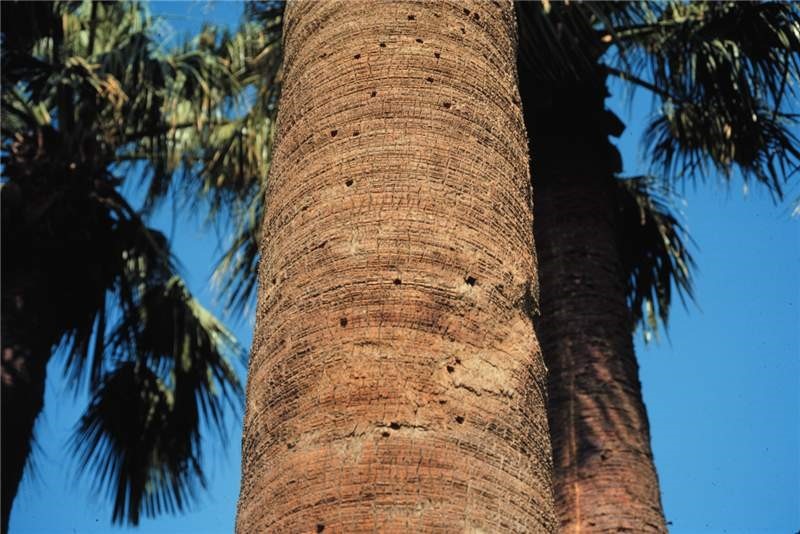
Once mature, the larvae pupate near the surface of the trunk. The adult beetles emerge approximately two months later, leaving behind characteristic large exit holes, about 0.5 inches (1.3 cm) in diameter. Adult beetles have a short lifespan of about two weeks and do not feed; all their nutritional requirements are met during the larval stage.
Host Plants and Damage
The Giant Palm Borer primarily infests two species of palm trees:
- California Fan Palm (Washingtonia filifera)
- Date Palm (Phoenix dactylifera)
It is important to note that Dinapate wrighti is considered a secondary pest.
This means that it typically attacks palms that are already dead, dying, or under severe stress, such as from drought or recent transplantation. It is not the primary cause of a palm’s decline.
The damage caused by the Giant Palm Borer can be extensive. The larval tunneling weakens the structural integrity of the palm trunk, which can lead to the crown of the palm breaking off or the entire tree falling over in high winds.
The large exit holes created by the emerging adults are a clear sign of infestation.
Pest Status and Management
Given its status as a secondary pest, the management of the Giant Palm Borer focuses on preventative measures and maintaining the health of palm trees.
Healthy, vigorous palms are much less susceptible to attack. The following are key management strategies:
Proper Cultural Care:
Providing adequate water, nutrients, and appropriate growing conditions is the most effective way to prevent infestations.
Sanitation:
Dead and dying palms should be promptly removed and disposed of, as they serve as breeding grounds for the beetles.
Chemical Control:
There are no chemical controls specifically recommended for the Giant Palm Borer. The use of insecticides is generally not effective because the larvae are protected deep within the palm trunk.