
The Chilean Wine Palm:
A History of Cultural Significance, Exploitation, and Resilience
Author: Johan Grabe Founder and CEO Koingnaas Palms
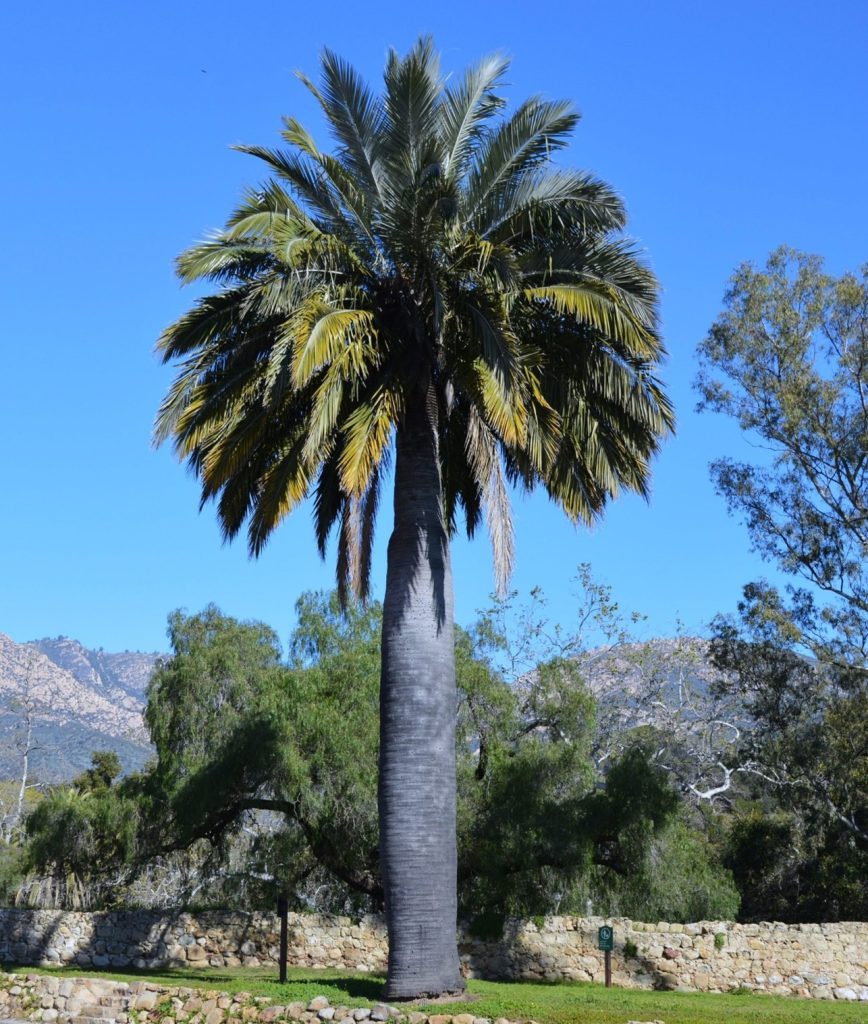
The Chilean Wine Palm (Jubaea chilensis) is a true giant of the plant kingdom, renowned for possessing the thickest trunk of any palm species in the world.
Endemic to a small, fragmented area of central Chile, this majestic palm has a rich and complex history intertwined with the cultural and economic life of the region.
For centuries, it has been both a revered natural resource and a victim of over-exploitation, a story that reflects the delicate balance between human tradition and ecological preservation.
This document explores the history of the Chilean Wine Palm, focusing on its profound cultural significance in Chile, its journey into global cultivation, and its current precarious conservation status.
Ancient Origins and Indigenous Use
The history of Jubaea chilensis stretches back into deep time. Fossil evidence suggests that the genus was once more widespread, and recent studies have even revealed its connection to prehistoric megafauna.
Analysis of tooth residue from the extinct gomphothere (Notiomastodon platensis), an elephant relative that roamed South America until about 12,000 years ago, showed that these animals consumed the palm’s fruit and likely served as a key seed disperser.
This finding suggests that the palm’s ecosystem has been altered since the end of the Pleistocene, long before the arrival of modern humans.
For centuries, indigenous peoples of central Chile utilized the palm for a variety of purposes. The leaves were woven into baskets and other goods, and the edible seeds, known as coquitos (little coconuts), provided a valuable food source.
The palm’s most significant contribution to Chilean culture, however, would come from its sap.
The Tradition of “Miel de Palma” (Palm Honey)
The most defining aspect of the Chilean Wine Palm’s cultural history is its use in the production of miel de palma, or palm honey, a sweet, thick syrup.
This tradition, which has been practiced for over 200 years, involves a destructive harvesting method.
To extract the sap, the entire tree must be felled. The apical meristem, or growing point, is then cut, and the sap that exudes from the wound is collected over the summer months.
A single mature palm can produce up to 400 liters of sap, which can be boiled down to create about 90 kilograms of palm honey.
The sap can also be fermented to produce palm wine, which gives the tree its common name.
This practice, while culturally significant, has had a devastating impact on the wild populations of Jubaea chilensis. Historical accounts from the 19th century, such as those by Vicuña Mackenna in 1877, describe massive extractions of palms for sap production.
This over-exploitation is the primary reason for the dramatic decline of the species. It is estimated that the current population of around 120,000 palms represents no more than 2.8% of the population that existed at the beginning of the 19th century.
European Discovery and Botanical History
The Chilean Wine Palm first entered European botanical literature in 1623, when Caspar Bauhin mentioned a palm from Chile with sweet fruit called “Coquillo”.
However, it was not until 1808 that the Italian-born Chilean naturalist Giovanni Ignacio Molina provided the first scientific description, naming it Palma chilensis.
The famous naturalist Charles Darwin encountered the palm during his voyage on the Beagle in 1834, but was notably unimpressed, describing them as “ugly trees” but acknowledging their value for the “treacle made from the sap”.
The palm’s journey through the complex world of botanical nomenclature continued, with names like Cocos chilensis and Jubaea spectabilis being used in the 19th century. Finally, in 1895, the French botanist Henri Ernest Baillon established the currently accepted name, Jubaea chilensis.
The genus name Jubaea honors Juba II, a king of the ancient kingdom of Mauretania.
Global Cultivation and Horticultural Stature
Jubaea chilensis began its journey to other parts of the world in the mid-19th century.
It arrived at the Royal Botanic Gardens, Kew, in the 1840s, where a specimen grew for over a century in the Temperate House before it had to be removed because it outgrew the structure.
The palm was also introduced to other parts of Europe, including Portugal, France, and Italy, where it became a prized ornamental in botanical gardens and private estates.
Today, the Chilean Wine Palm is cultivated in temperate and Mediterranean climates worldwide.
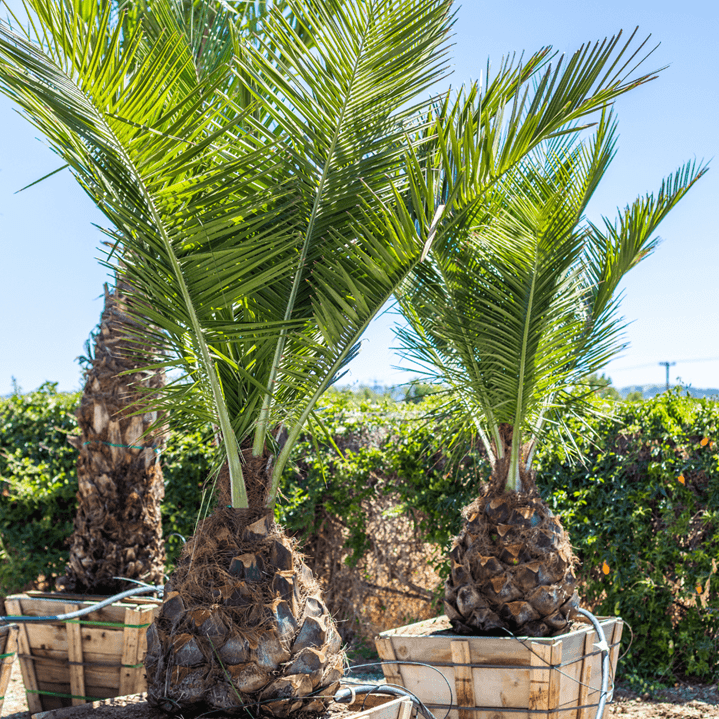
It is highly valued for its massive, architectural trunk, its cold hardiness (tolerating temperatures down to about 15°F or -9°C), and its majestic presence in the landscape.
Its slow growth rate, however, means that planting a Jubaea is an investment for future generations.
Conservation Status and Modern Challenges
Due to the historical over-exploitation for sap and ongoing threats from habitat loss, agricultural expansion, and over-harvesting of its seeds, Jubaea chilensis is now considered Endangered by the IUCN.
The vast majority of the remaining wild population is concentrated in just a few locations, with the largest stands in La Campana National Park and the privately owned Hacienda Cocalán.
Conservation efforts are underway to protect the remaining populations and promote the regeneration of this iconic species.
The destructive practice of felling trees for sap is now legally restricted, and the management of protected areas is crucial for the palm’s survival. However, the species still faces challenges, including predation of its seeds by introduced species like rats and rabbits, which hinders natural regeneration.
The history of the Chilean Wine Palm is a poignant story of a magnificent species that has been both a cultural cornerstone and a victim of human activity.
From its ancient role in the Chilean ecosystem to its modern status as a globally cherished ornamental, Jubaea chilensis embodies a rich natural and cultural heritage.
Its survival now depends on a concerted effort to protect its remaining habitats and ensure that this “aristocrat among palms” can continue to grace the landscapes of Chile and the world for centuries to come.
References