The Noble Palm:
A History of Bismarckia nobilis
Author: Johan Grabe Founder and CEO Koingnaas Palms
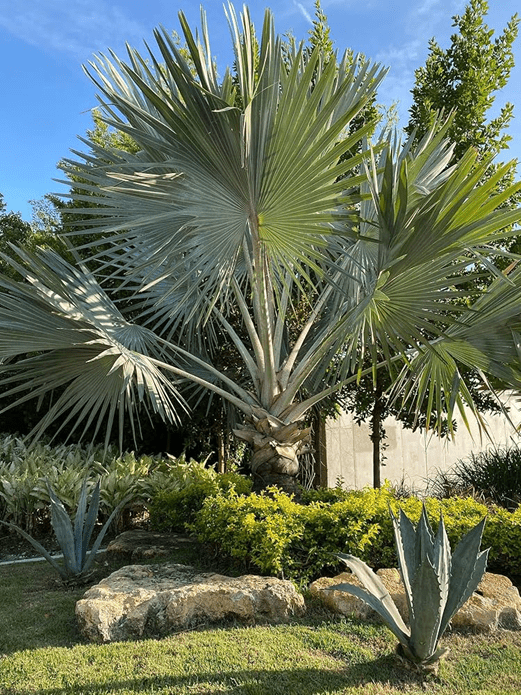
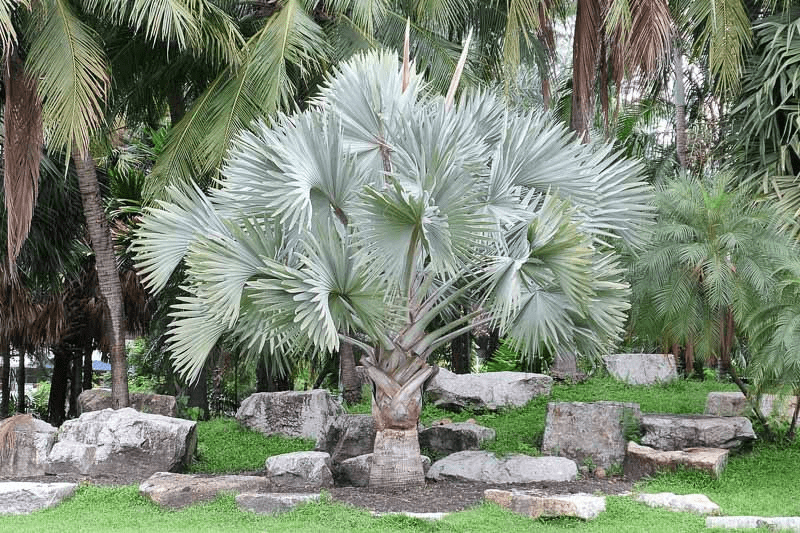
Bismarckia nobilis, the Bismarck Palm, is one of the most visually stunning and iconic palms in the world.
With its massive, silvery-blue fan leaves and imposing stature, it has become a symbol of tropical and subtropical landscapes.
Its history is a fascinating journey from the remote savannas of Madagascar to its current status as a global horticultural superstar.
Discovery and a Noble Name
The Bismarck Palm is endemic to Madagascar, where it grows in the open grasslands and savannas of the western and northern parts of the island.
It was first described for science in 1881 by the German botanists Johann Hildebrandt and Hermann Wendland.
In a rare move for the botanical world, they named the new genus Bismarckia in honor of the first chancellor of the German Empire, Otto von Bismarck.
The species name, nobilis, is Latin for “noble,” a fitting descriptor for this majestic palm 1. In its native Madagascar, the palm is known by the Malagasy name “satrana”.
A Slow Journey to Global Fame
Despite its striking appearance, the Bismarck Palm remained relatively unknown outside of its native Madagascar for many decades.
While a few specimens were planted in botanical gardens around the world, it was not until the late 20th century that its popularity began to soar.
The commercial introduction of the Bismarck Palm to the nursery trade around the year 2000 marked a turning point, and in the last two decades, it has become one of the most sought-after ornamental palms.
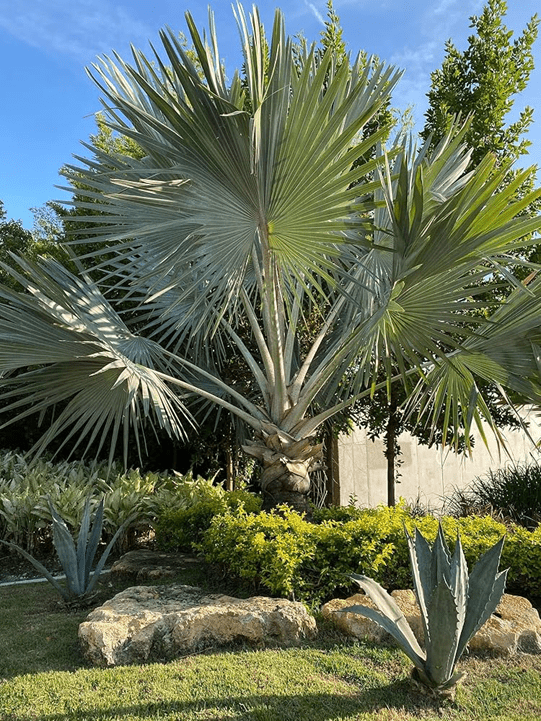
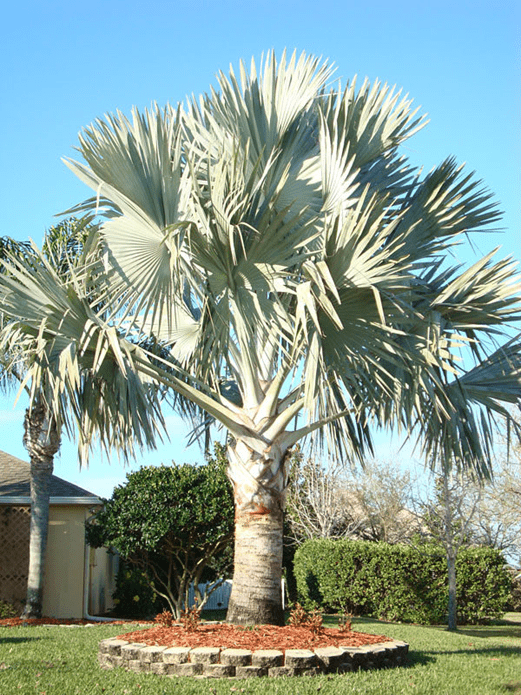
This recent surge in popularity is due to several factors. The palm’s dramatic silver-blue foliage, which is covered in a waxy coating that reflects sunlight, creates a spectacular visual effect.
Its large size and symmetrical crown make it an ideal focal point in a landscape.
Furthermore, it is relatively fast-growing and tolerant of a wide range of conditions, including drought and heat, making it suitable for cultivation in many warm climates.
Conservation and the Future
Bismarckia nobilis is currently listed as a species of “Least Concern” on the IUCN Red List, as it is widespread and common in its native range.
However, it does face threats from habitat loss due to agricultural expansion and an increasing frequency of fires. The establishment of protected areas in Madagascar, such as the Antrema Protected Area, is helping to conserve the palm and its savanna habitat.
The story of the Bismarck Palm is a testament to the incredible biodiversity of Madagascar and the enduring appeal of beautiful and resilient plants. From its humble origins in the grasslands of a remote island to its current status as a global landscape icon, Bismarckia nobilis truly lives up to its noble name.
Traditional Uses and Cultural Significance
In its native Madagascar, the Bismarck Palm has long been a valuable resource for local communities.
The leaves are used for thatching roofs and weaving baskets, and the pith of the palm is sometimes eaten as food.
The trunk is also used for timber in construction.
The Sakalava ethnic group, in particular, has a strong tradition of using the palm for a variety of purposes.