
The Enduring Sentinel:
A History of Trithrinax campestris, the Caranday Palm
Author: Johan Grabe Founder and CEO Koingnaas Palms
Trithrinax campestris, the Caranday Palm, is a living monument of the South American landscape.
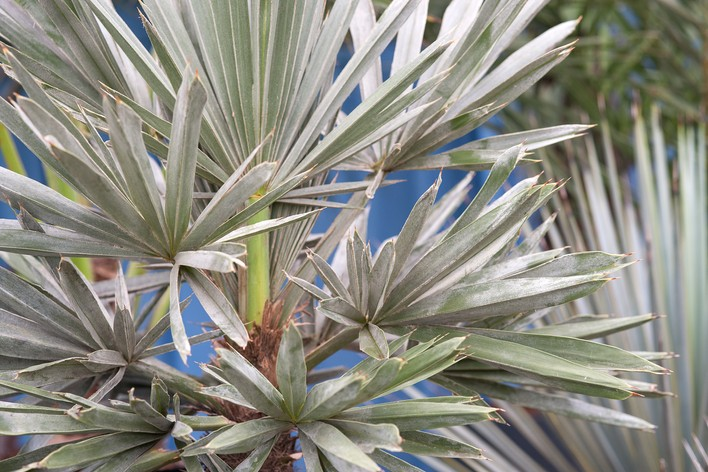
With its rugged, fibrous trunk and crown of stiff, silvery-blue fronds, it is a symbol of resilience, adapted to harsh climates and deeply woven into the cultural fabric of its native lands.
Its history stretches from ancient indigenous use to its modern status as a prized ornamental, a testament to its enduring utility and unique beauty.
An Ancient and Resilient Native
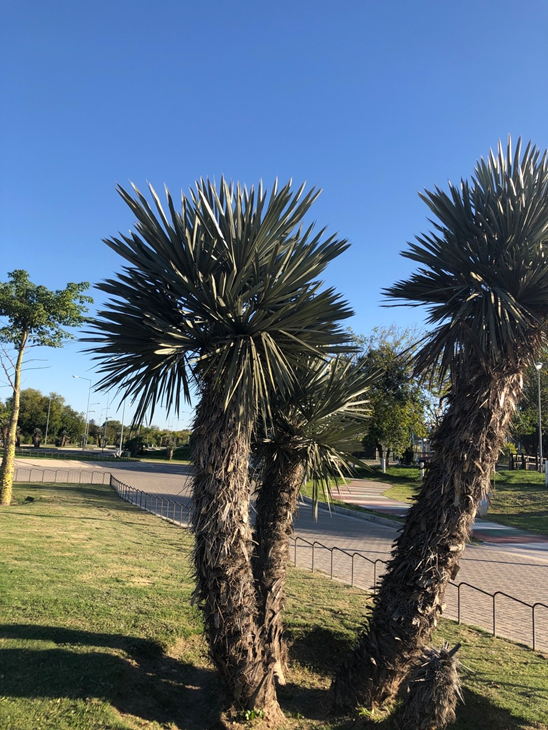
The Caranday Palm is native to the savannas and arid highlands of northern Argentina, Uruguay, and parts of Paraguay and Brazil.
It is a keystone species in its ecosystem, particularly in the unique palm forests of Papagayos, in the San Luis province of Argentina, where it creates a savanna-like environment against the backdrop of the Comechingones mountains.
This palm is renowned for its incredible hardiness.
It is one of the most cold-tolerant palms in the world, capable of withstanding temperatures down to -15°C (5°F) and thriving in poor, rocky soils.
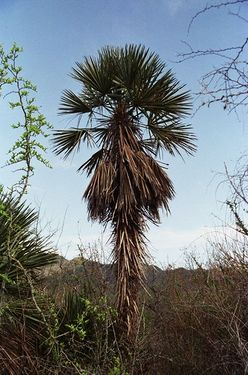
Its most distinctive feature is the thick, fibrous coat of old, dead leaf bases that covers its trunk, which provides insulation against both extreme cold and the frequent fires of its grassland habitat.
A History of Human Use: From Ancient Times to Modern Crafts
The relationship between humans and the Caranday Palm is ancient.
Archaeological evidence from the lowlands of central Argentina has revealed that indigenous populations were consuming or manipulating this palm for at least the last 2,600 years.
Microfossils of Trithrinax campestris found in the dental calculus of individuals from the El Diquecito archaeological site provide the first direct evidence of its use by pre-Columbian peoples, long before the introduction of agriculture in the region.
This long history of use continues to the present day.
The indigenous Comechingones people, who inhabited the mountains of central Argentina, relied on the palm for a variety of needs, a tradition that has been passed down through generations of local artisans.
The strong, durable fibers from its leaves are the primary material for a wide range of traditional crafts:
Hats and Clothing:
The leaves are woven into fine, breathable hats that provide excellent protection from the sun, as well as durable shoes and sandals.
Household Goods:
The fibers are used to create baskets, fans, and rudimentary brushes.
Beverages:
While the fruits are not typically eaten, they are fermented to create a local alcoholic beverage.
These artisan traditions are not just a continuation of cultural heritage; they also represent a sustainable use of a natural resource, as the harvesting of leaves can be done without harming the palm itself.
A Global Ornamental
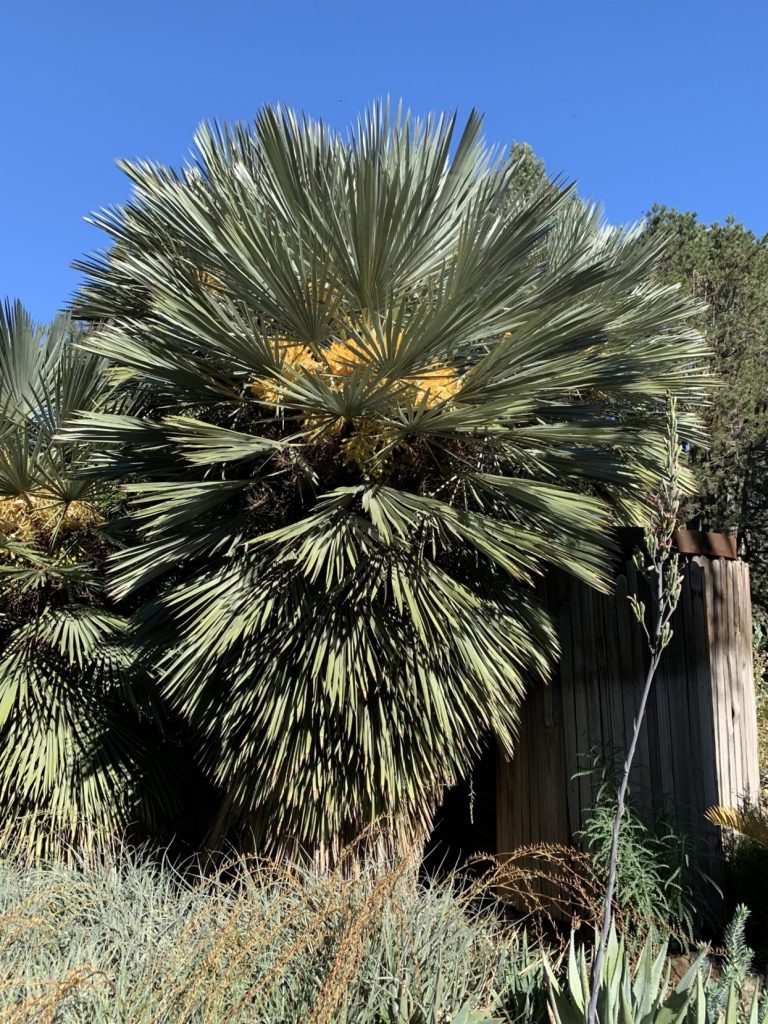
The same qualities that make the Caranday Palm so resilient in its native habitat—its hardiness, drought tolerance, and unique appearance—have made it a sought-after ornamental palm for collectors and landscapers around the world.
It was introduced to European gardens in the 1990s, with many specimens imported from Argentina.
Its ability to thrive in a wide range of climates, including as far north as the British Isles, has made it a popular choice for creating a subtropical look in temperate gardens.
However, the future of the Caranday Palm in its native range is facing challenges. Deforestation for agriculture and the risk of fire pose significant threats to the natural palm forests.
In places like Papagayos, conservation efforts are underway to protect these unique ecosystems, recognizing them as a vital part of Argentina’s natural and cultural heritage.
The Caranday Palm, a sentinel of the South American landscape for millennia, continues to be a symbol of both natural resilience and the enduring connection between people and plants.
References
[1] Wikipedia. (n.d.). Trithrinax campestris. Retrieved from
[3] Tavarone, A., Colobig, M. M., & Fabra, M. (2019 ). Late Holocene plant use in lowland central Argentina: Microfossil evidence from dental calculus. Journal of Archaeological Science: Reports, 26, 101895.