
A Royal Journey:
The History of Syagrus romanzoffiana, the Queen Palm
Author: Johan Grabe Founder and CEO Koingnaas Palms
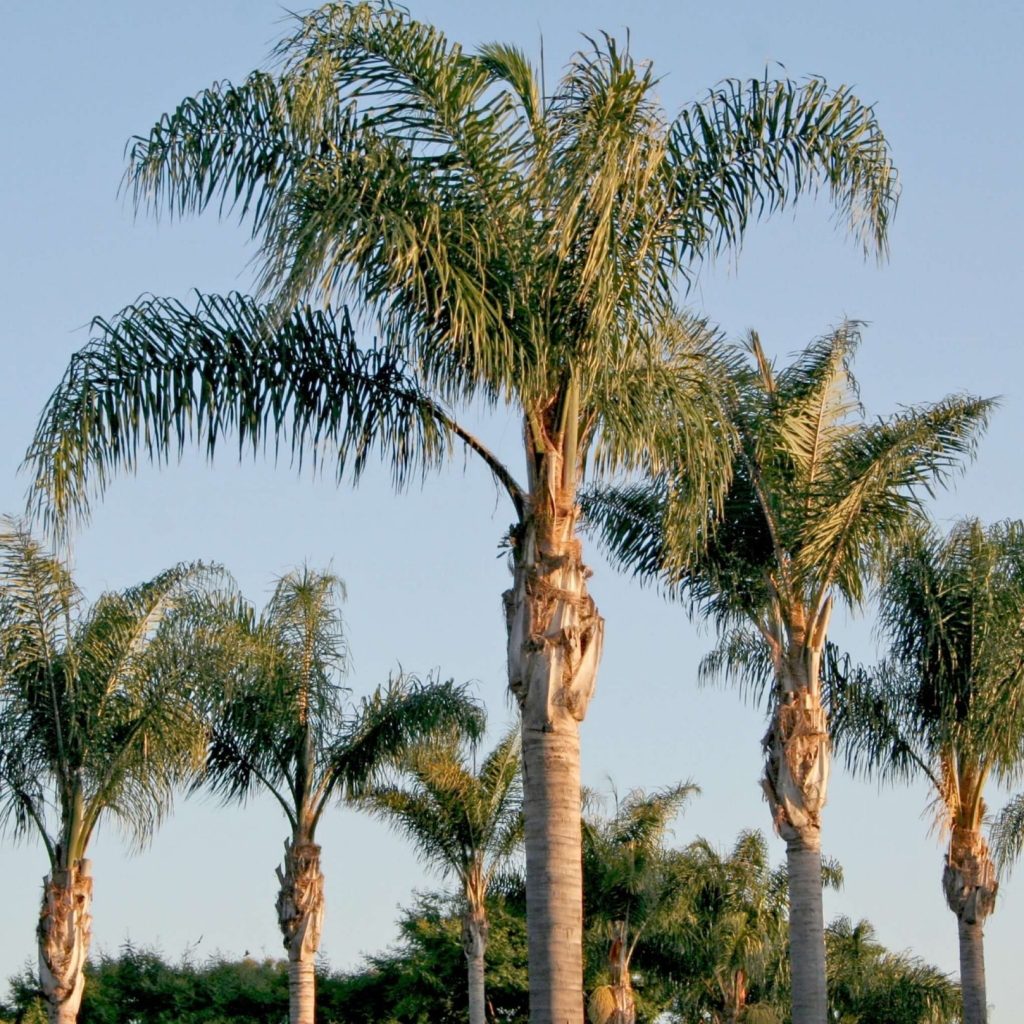
Syagrus romanzoffiana, the Queen Palm, is one of the most recognizable and widely planted palms in the world.
Its graceful, arching fronds and smooth, stately trunk have made it a landscape staple in warm climates from California to Australia.
But behind its modern popularity lies a fascinating history of exploration, taxonomic confusion, and global horticultural trade that transformed it from a South American native into a global icon.
A Case of Mistaken Identity: The Cocos plumosa Saga
While the official discovery was being documented, a parallel story was unfolding in the horticultural world that would lead to a century of confusion. Around 1825, the famous Loddiges nursery in England imported seeds of a Brazilian palm that they began selling under the name Cocos plumosa (the “Feathery Coconut Palm”).
This name, though never formally published with a scientific description, became immensely popular.
One of these seedlings eventually made its way to the prestigious Kew Gardens in London.
For decades, it was misidentified by botanists there. It wasn’t until the palm flowered and fruited for the first time in 1859 that it became clear it was a distinct, and as yet undescribed, species.
In 1860, Kew’s director, Joseph Dalton Hooker, reluctantly gave the name Cocos plumosa a valid scientific description.
For the next 50 years, the horticultural world knew this popular palm as Cocos plumosa, while the true Cocos romanzoffiana remained a more obscure, scientific name.
It wasn’t until 1912 that botanist Alwin Berger correctly recognized that they were the same species, and Cocos plumosa was reclassified as a variety of Cocos romanzoffiana.
The final taxonomic shift came in 1968, when the entire group was moved into the genus Syagrus, giving us the modern name Syagrus romanzoffiana.
Even today, the old name persists, and the Queen Palm is still sometimes referred to as the “Cocos Palm.”
From South American Native to Global Ornamental
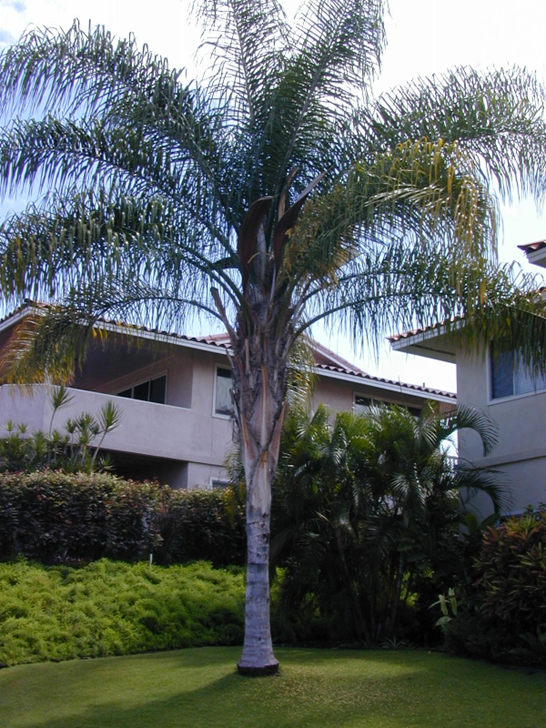
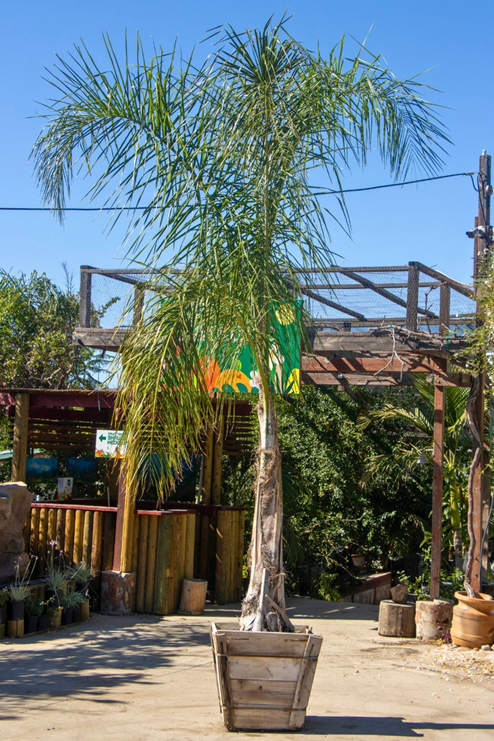
Syagrus romanzoffiana is native to a vast area of South America, including southern Brazil, northern Argentina, Paraguay, Uruguay, and Bolivia.
In its native habitat, it is a common and adaptable palm, and indigenous communities have traditionally used it for food (the fruit and heart of palm), construction materials from its wood, and for weaving baskets from its leaves.
Its journey to global stardom began in the late 19th and early 20th centuries.
The palm was introduced to Australia in the 1860s and saw a massive surge in popularity in the 1960s and 1970s, becoming a fixture in new housing developments.
Its fast growth, elegant appearance, and adaptability made it an ideal choice for creating a tropical look in suburban landscapes.
Today, it is one of the most ubiquitous ornamental palms in the world. However, its success has come with a downside. The palm produces large quantities of fruit, which are readily dispersed by birds and fruit bats.
This has allowed it to escape cultivation and become an environmental weed in some regions, such as Queensland and New South Wales in Australia, where it can outcompete native vegetation.
From its discovery on a Russian expedition to its complex taxonomic journey and its rise as a global landscape phenomenon, the history of the Queen Palm is as dramatic and elegant as the tree itself.
References
[1] Wikipedia. (n.d.). Syagrus romanzoffiana. Retrieved from
[2] Useful Tropical Plants. (n.d. ). Syagrus romanzoffiana. Retrieved from
[3] Spennemann, D. H. R. (2023 ). Horticultural distribution and subsequent naturalization of Queen Palms (Syagrus romanzoffiana) in south-eastern Australia. Cunninghamia, 23, 027-031.