
The King’s Palm:
A History of Nannorrhops ritchiana, the World’s Hardiest Palm
Author: Johan Grabe Founder and CEO Koingnaas Palms
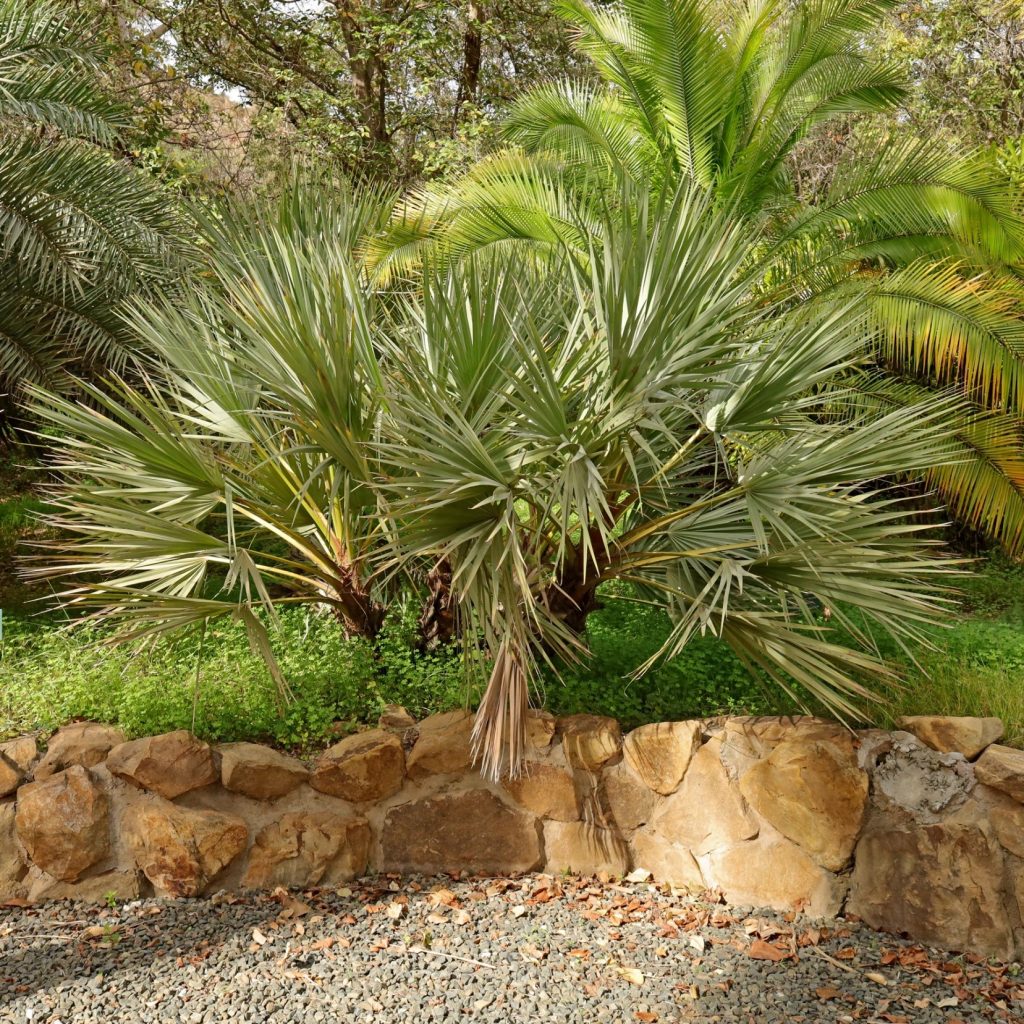
Nannorrhops ritchiana, the Mazari Palm, is a plant of extraordinary resilience and deep historical significance.
Native to the harsh, arid landscapes of Afghanistan, Pakistan, and Iran, it is renowned as the most cold-hardy palm in the world, capable of surviving temperatures as low as -20°C (-4°F).
But beyond its incredible toughness, the Mazari Palm has a rich history that stretches from the daily lives of rural Pakistani communities to the royal palaces of the ancient world.
An Ancient Connection:
The King’s Palm at Jericho
One of the most remarkable discoveries in the history of Nannorrhops ritchiana comes from the ancient city of Jericho. During excavations of the Early Bronze Age Royal Palace G, which was destroyed by fire around 2350 BC, archaeologists unearthed a single, charred palm fruit (a drupe) in a room behind the throne room.
Through detailed analysis using archaeobotanical techniques and CT scans, scientists identified the fruit as belonging to Nannorrhops ritchiana. This was a startling discovery, as the Mazari Palm is not native to the Jericho region. Its natural habitat is thousands of kilometers to the east, in the Saharo-Indian region. The presence of this single, exotic fruit in a royal palace suggests it was a luxury item, a symbol of prestige and power, acquired through long-distance trade routes that crossed the deserts of Saudi Arabia—trade networks that archaeologists are only now beginning to fully understand. This tiny, ancient fruit provides a fascinating glimpse into the interconnectedness of the Bronze Age world and the high value placed on this unique palm even 4,500 years ago.
A Cornerstone of Culture in Pakistan
While it may have been a royal luxury in ancient Jericho, in its native lands, the Mazari Palm has long been a cornerstone of everyday life.
In the arid regions of Pakistan, from the coastal areas of Balochistan to the northern tribal districts, the palm is a vital economic and cultural resource, especially in areas where the harsh climate makes other forms of agriculture difficult.
Known locally as “Mazri,” the palm is a versatile and indispensable provider:
Handicrafts:
The durable, fan-shaped leaves are the primary material for a vast array of traditional handicrafts.
For centuries, local artisans have woven the leaves into mats for sitting and praying, baskets for storage, hand fans for cooling, and sturdy ropes. The craftsmanship extends to more complex items like hats, sandals, and even furniture like bedsteads.
Household Goods:
The leaves are also used to create essential household items, including brooms, grain storage bins, and insulated “hot pots” for keeping food warm.
Fuel and Construction:
In a region where resources are scarce, no part of the palm is wasted.
The dried leaves, stems, and even the woody flower stalks are used as fuel for cooking.
Historically, the leaves and stems were also used for thatching roofs and building fences.
This deep reliance on the Mazari Palm has fostered a rich body of traditional ecological knowledge (TEK) among the local communities, with skills and techniques for harvesting and crafting passed down through generations.
Botanical Discovery and Modern Status
Nannorrhops ritchiana was formally described for Western science in the 19th century, with its specific name honoring the botanist Ritchie who collected specimens.
It is the sole species in its genus, making it unique in the palm family.
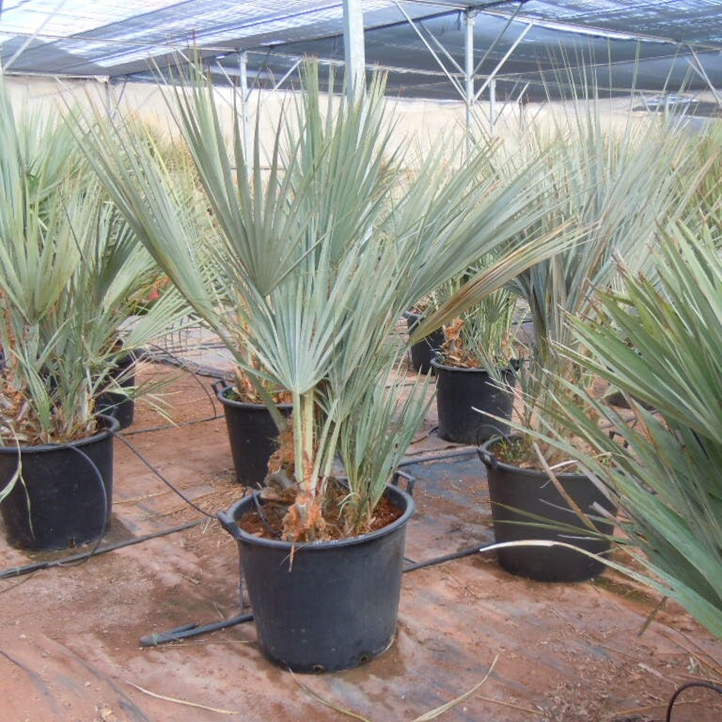
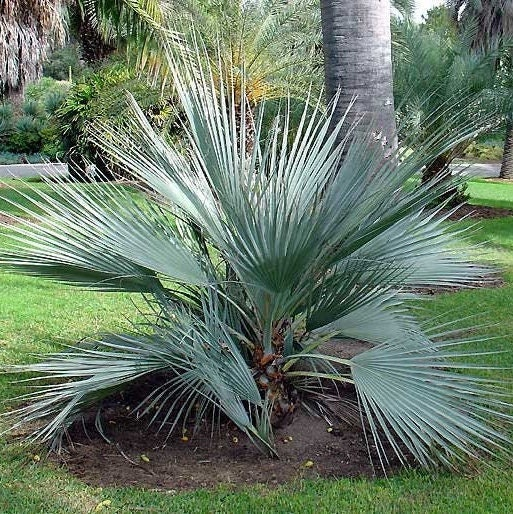
Today, the very qualities that have made the Mazari Palm so vital to the people of Pakistan and Afghanistan—its toughness and resilience—have made it a prized ornamental for palm enthusiasts in colder climates.
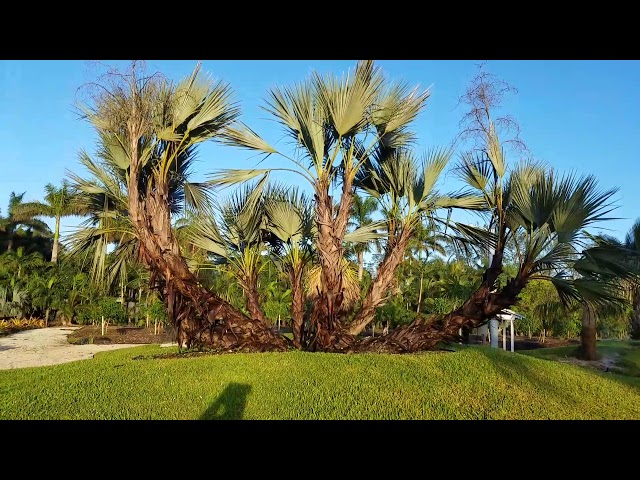
Its ability to withstand extreme cold and drought, combined with its attractive silvery-blue foliage and clumping, shrub-like growth habit, has made it a sought-after specimen for gardens in Europe and North America.
However, the future of the Mazari Palm in its native habitat is uncertain. Over-harvesting, habitat loss, and the increasing availability of cheap, synthetic alternatives to its traditional products are threatening the wild populations.
Researchers have noted a decline in both the palm populations and the traditional knowledge associated with its use, as younger generations are drawn away from traditional crafts.
The story of the Mazari Palm is therefore a poignant reminder of the delicate balance between ancient traditions and the pressures of the modern world.
References
[1] Abdullah, et al. (2024). On the Trail of the Mazri Palm (Nannorrhops ritchieana) in Pakistan. PALMS, 68(1), 26-39.
[2] Moricca, C., Nigro, L., Gallo, E., & Sadori, L. (2021). The dwarf palm tree of the king: a Nannorrhops ritchiana in the 24th-23rd century BC palace of Jericho. Plant Biosystems, 155(4), 823-832.
[3] Khan, S. M., et al. (2020). Mazri (Nannorrhops ritchiana (Griff) Aitch.): a remarkable source of manufacturing traditional handicrafts, goods and utensils in Pakistan. Journal of Ethnobiology and Ethnomedicine, 16(1), 45.