
The Sweet Legacy of the Forest:
A History of Phoenix sylvestris
Author: Johan Grabe Founder and CEO Koingnaas Palms
Phoenix sylvestris, whose Latin name translates to “Phoenix of the forest,” is a palm of immense cultural, economic, and historical significance.
Commonly known as the Silver Date Palm, Wild Date Palm, or Sugar Date Palm, this resilient and graceful tree has been a cornerstone of rural life on the Indian subcontinent for centuries.
Its history is not just one of botanical interest but is deeply woven into the traditions of food, medicine, and craftsmanship that have defined the region.
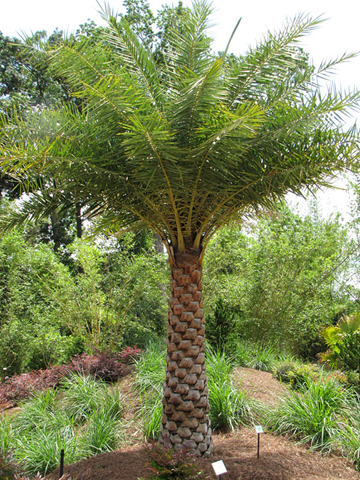
Origins and Botanical Identity
Native to southern Pakistan, India, Nepal, Bhutan, and Bangladesh, Phoenix sylvestris is a hardy palm that thrives in plains and scrublands up to an elevation of 1,300 meters.
It is a close relative of the true date palm, Phoenix dactylifera, but is distinguished by its more robust trunk, denser crown of silvery-green fronds, and smaller, less palatable fruit.
The tree can grow up to 15 meters tall, with a beautiful, full crown that can hold up to 100 gracefully arching leaves, giving it a striking ornamental appearance that has made it popular in landscaping worldwide.
The “Sugar Date Palm”: A Source of Sweetness and Sustenance
The most defining aspect of this palm’s history is its role as a source of sugar.
For generations, it has been known as the “Sugar Date Palm” or “Toddy Palm” because of the sweet sap that is expertly tapped from its trunk.
This practice has been a vital part of rural economies, particularly in regions like West Bengal in India and across Bangladesh.
The process involves making a cut in the trunk and collecting the dripping sap, known as neera.
This fresh sap is a nutritious and cooling drink, rich in iron and vitamins.
However, its true economic value is unlocked through processing:
Palm Jaggery:
The fresh sap is boiled down to produce a rich, unrefined sugar called palm jaggery (gur), a staple sweetener in traditional Indian and Bengali cuisine.
Toddy:
When the sap is allowed to ferment, it transforms into a mildly alcoholic beverage known as toddy, which has been a traditional drink in the region for centuries.
This cottage industry has provided a reliable source of household income for countless families and continues to be a significant part of the agricultural landscape.
Modern Status: From Forest Staple to Global Ornamental
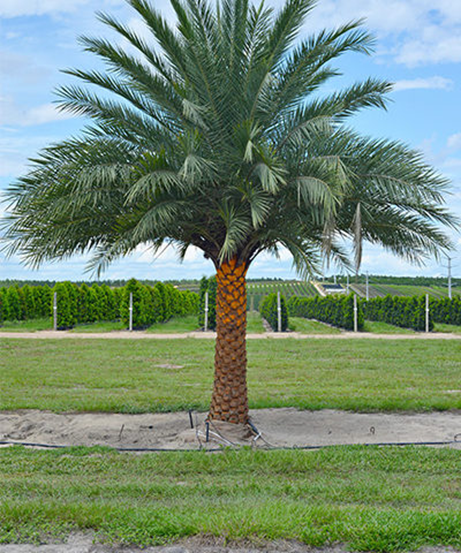
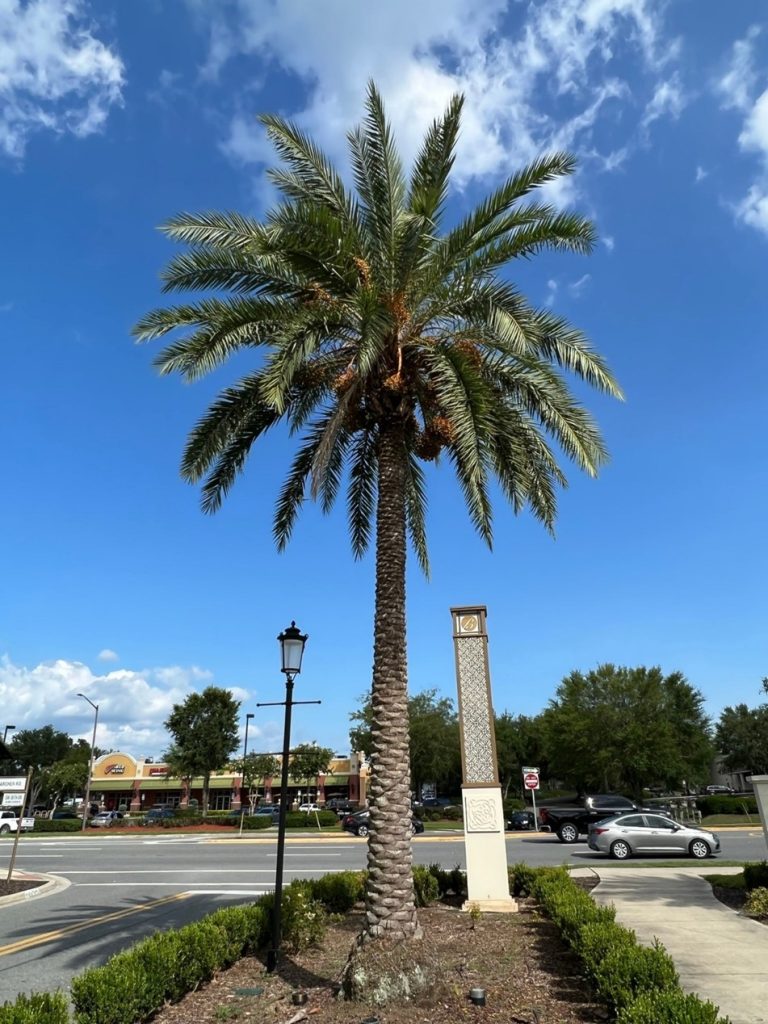
While Phoenix sylvestris remains an important economic plant in its native lands, its beauty and resilience have led to its adoption as a popular ornamental palm in warm temperate and subtropical regions across the globe.
It has been successfully introduced to places like Puerto Rico, Mauritius, and the southern United States. Landscapers value it for its low maintenance, drought tolerance, and the elegant, silvery-blue hue of its dense, feathery crown.
From the forests and plains of India to the avenues of Florida, the history of Phoenix sylvestris is a testament to its enduring utility and beauty—a sweet legacy that continues to sustain and inspire.
References
[1] Wikipedia. (n.d.). Phoenix sylvestris. Retrieved from
[2] Riffle, R. L., & Craft, P. (2003 ). An Encyclopedia of Cultivated Palms. Timber Press.