
The Enduring Legacy of the Blue Sabal:
A History of Sabal uresana
Author: Johan Grabe Founder and CEO Koingnaas Palms
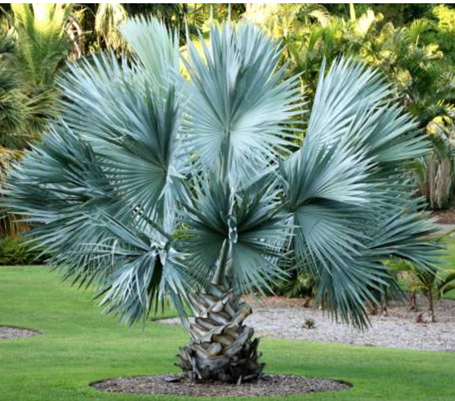
Sabal uresana, the Sonora Palmetto or Blue Sabal, is a striking fan palm celebrated for its beautiful blue-gray foliage and remarkable resilience.
Native to the rugged foothills of the Sierra Madre Occidental in northwestern Mexico, this palm has a rich history intertwined with the culture, economy, and ecology of the Sonoran region.
From its early discovery by botanists to its centuries-long use by local communities, the story of Sabal uresana is one of adaptation, utility, and enduring appeal.
Botanical Discovery and Taxonomy
The formal botanical history of Sabal uresana began in 1900 when it was officially described by the American botanist William Trelease.
The specific epithet, uresana, pays homage to Ures, a town in the state of Sonora, Mexico, that lies within the palm’s native range.
This species is distinguished by its striking blue-green to silvery-blue fan-shaped leaves, a coloration that is among the most pronounced in the Sabal genus.
A key diagnostic feature is its smooth petiole (leaf stalk) that extends well into the bluish leaf blade, a characteristic of costapalmate palms.
Geographic Distribution and Habitat
Sabal uresana is endemic to the states of Sonora and Chihuahua in Mexico, where it thrives in a variety of challenging environments.
It is commonly found along riverbanks, in arroyos, and on canyon slopes, often in desert scrub and thorn forests.
This palm is also found in the valleys and foothills of oak woodlands at elevations up to 1,200 meters (3,937 feet).
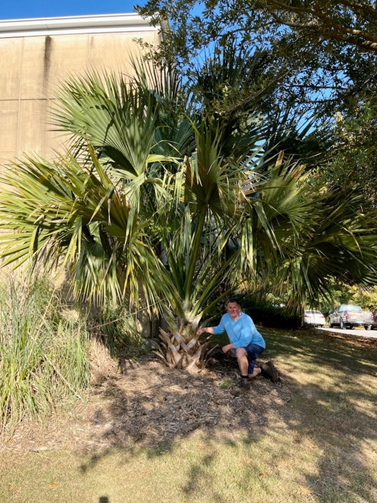
Its ability to withstand both intense heat and significant frost—tolerating temperatures down to 10°F (-12°C)—makes it one of the most cold-hardy and adaptable of the desert palms.
Ethnobotanical Significance and Traditional Uses
Long before its formal botanical classification, Sabal uresana was a cornerstone of life for the indigenous and local peoples of Sonora.
It is the most economically important native palm in the region and is frequently mentioned in the earliest written historical accounts of the area.
The palm’s local name, palma blanca (white palm), refers to the whitish, waxy coating on its fronds.
Every part of the palm was traditionally utilized:
- Leaves:
The most important resource, the young, unexpanded leaves were (and still are) expertly woven into a wide array of products, including baskets, mats, hats, and rope.
Older, more rigid leaves were fashioned into brooms. - Fibers:
The stringy fibers that hang between the leaflets were collected to make durable saddle blankets. - Trunks and Petioles:
The sturdy trunks were used to construct corrals and as crossbeams in housing, while the long petioles were repurposed as racks for aging cheese, stirring sticks, and broom handles. - Food:
The terminal bud, or “heart of palm,” was sometimes harvested as a food source, though this practice kills the tree. The sweet, sugary pulp (mesocarp) of the fruit was also eaten fresh or cooked.
This extensive use highlights the deep traditional ecological knowledge (TEK) held by local communities, who developed sustainable management practices for this vital resource over generations.
Cultivation and Modern Importance
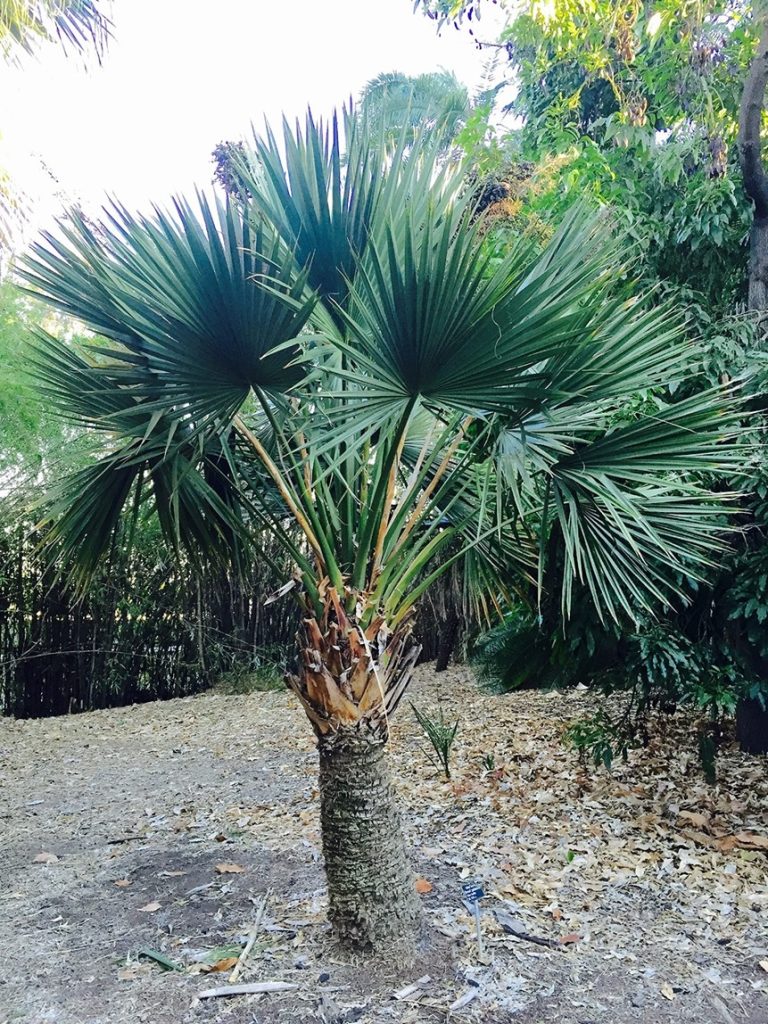
In contemporary times, the appeal of Sabal uresana has expanded far beyond its native range. It is now a highly prized ornamental in arid and temperate landscapes around the world.
Valued for its stunning blue color, clean trunk, and robust nature, it is often used as a striking accent plant in gardens and parks. It is considered a superior alternative to other blue palms like Brahea armata (which grows more slowly) and Bismarckia nobilis (which is less cold-hardy).
Conservation Status
Despite its successful cultivation abroad, Sabal uresana is facing threats in its native habitat.
The International Union for Conservation of Nature (IUCN) has listed the species as Vulnerable due to habitat loss from agriculture, grazing, and infrastructure development.
The very survival of this iconic Sonoran palm depends on the conservation of its natural ecosystems and the preservation of the traditional knowledge that has sustained it for centuries.
References
[1] Trelease, W. (1900). Sabal uresana. In: Annual Report of the Missouri Botanical Garden, 11, 49.
[2] University of Arizona Campus Arboretum. (n.d.). Sabal uresana. Retrieved from
[3] Joyal, E. (1996 ). The Use of Sabal uresana (Arecaceae) and Other Palms in Sonora, Mexico. Economic Botany, 50(4), 429–445.
[4] Arizona-Sonora Desert Museum. (n.d.). Alamos Trees; Sabal Uresana. Retrieved from