
The Enduring Legacy of the True Date Palm:
A Comprehensive History of Phoenix dactylifera
Author: Johan Grabe Founder and CEO of Koingnaas Palms
The True Date Palm, Phoenix dactylifera, stands as one of the most ancient and significant cultivated plants in human history.
Its enduring legacy is woven into the fabric of civilizations, providing sustenance, shaping cultures, and even influencing religious traditions for millennia.
This document provides a comprehensive history of the date palm, from its ancient origins and domestication to its modern cultivation and the challenges it faces today.
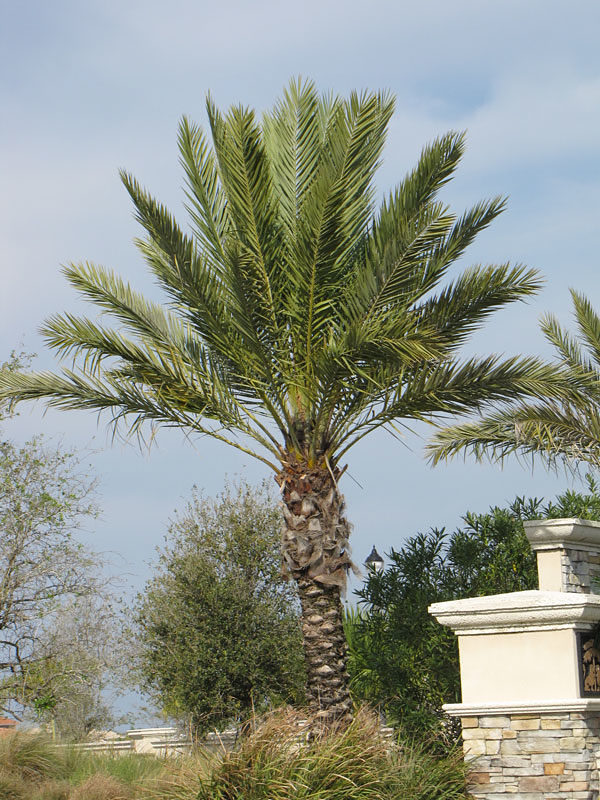
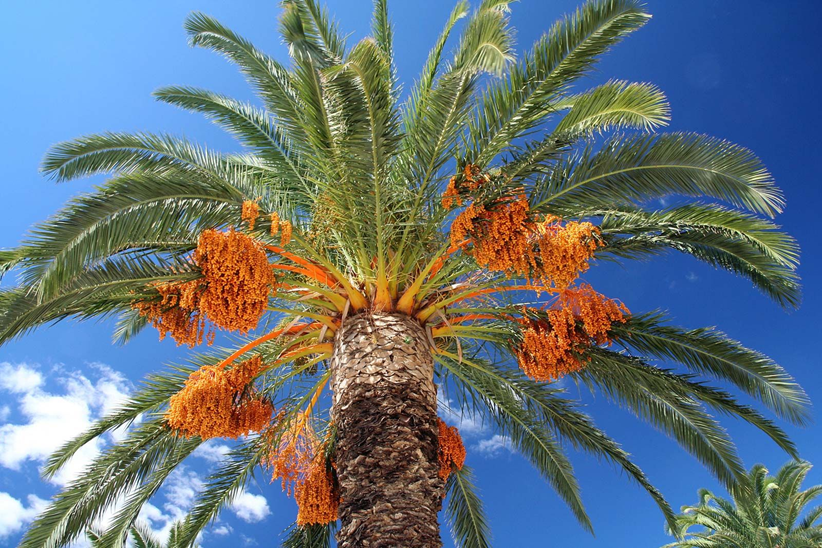
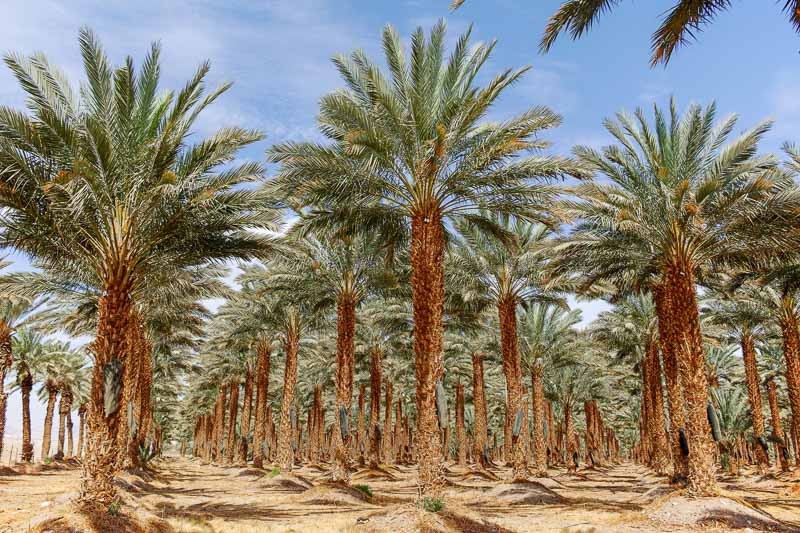
Ancient Origins and Domestication
The precise origin of the date palm is shrouded in the mists of antiquity, though it is widely believed to have emerged from the region of Mesopotamia or the Persian Gulf [1, 3].
Fossilized remains suggest that the ancestors of the date palm were flourishing as far back as 50 million years ago.
Archaeological evidence confirms its cultivation as early as 4000 BCE in Mesopotamia, where it was used in the construction of the temple of the moon god near Ur in Southern Iraq.
The domestication of the date palm is a pivotal event in agricultural history. Genomic analyses indicate that domestication likely occurred in the eastern portion of the Arabian Peninsula over 6,000 years ago.
From there, its cultivation spread, with evidence of date palm gardens in southern Mesopotamia dating to the 5th millennium BCE.
By the 4th millennium BCE, domesticated date palms were a staple in the Middle East, expanding to North Africa by the Roman period.
Recent genetic research has shed further light on the date palm’s ancestry.
A study of a 2,100-year-old Egyptian date palm leaf from Kew’s Economic Botany Collection revealed that ancient date palms hybridized with wild relatives, including the Cretan date palm (P. theophrasti) and the sugar date palm (P. sylvestris).
This introgression of wild genes may have contributed to the date palm’s resilience and adaptability as it spread to new environments.
Historical Spread and Cultivation
The spread of the date palm from its center of origin followed two primary routes.
One path led eastward from Mesopotamia to Iran and the Indus Valley, while the other extended westward from Egypt across North Africa and the Sahel.
The Phoenicians, renowned traders of the ancient world, played a significant role in disseminating the date palm throughout the Mediterranean.
During the Arab Agricultural Revolution, the cultivation of the date palm was further refined and expanded. Medieval Islamic scholars like Ibn al-‘Awwam described detailed methods for propagating and caring for date palms in their agricultural treatises.
The establishment of oases and the development of sophisticated irrigation techniques, such as the aflaj system in the UAE, were crucial for the expansion of date palm cultivation in arid regions [3, 4].
The introduction of the date palm to the New World occurred much later. Spanish missionaries brought the date palm to California in the 18th century, with the first plantings at Mission San Diego de Alcalá in 1769.
In the early 20th century, the introduction of the Medjool cultivar from Morocco to the United States laid the foundation for the modern American date industry.
Timeline of Date Palm Cultivation:
- 50 million years ago
- ~4000 BCE
- 5th millennium BCE
- 4th millennium BCE
- 3000-2000 BCE
- Roman Period
- 12th Century CE
- 18th Century CE
- Early 20th Century CE
Cultural and Religious Significance

The date palm’s importance extends far beyond its agricultural value. It is deeply embedded in the cultural and religious traditions of the Middle East and North Africa.
The ancient Egyptians revered it as a symbol of fertility, while the Greeks and Romans used it to signify triumph [1, 4].
In Mesopotamia, it was associated with lunar worship and called sindirqa, or “road to the moon”.
The date palm holds a sacred place in Judaism, Christianity, and Islam. In the Hebrew Bible, the word for date palm, “tamar,” is a symbol of grace and elegance, and it is one of the seven holy fruits.
The New Testament describes Jesus’s triumphant entry into Jerusalem on Palm Sunday, with crowds laying palm fronds in his path.
In Islam, the date palm is mentioned more than any other fruit-bearing plant in the Quran.
The Prophet Muhammad is said to have recommended dates for their health benefits, and they are traditionally eaten to break the fast during Ramadan [1, 3].
“A righteous person will flower like a date palm,” goes the verse in Psalms, one explanation being that the date palm, like the righteous, grows straight and sustains others with its fruit.
The Judean Date Palm and Modern Science

A remarkable testament to the date palm’s resilience is the story of the Judean date palm.
In 2005, scientists successfully germinated a 2,000-year-old date palm seed discovered at the ancient fortress of Masada.
This tree, named Methuselah, was the first of several ancient date palms to be resurrected from seeds that had lain dormant for two millennia.
The successful germination of these ancient seeds has provided a unique opportunity to study the genetics of the date palm’s ancestors.
These resurrected trees, including Adam, Jonah, Uriel, Boaz, Judith, and Hannah, offer insights into the genetic diversity of ancient date palm populations and may hold valuable traits for improving modern cultivars.
Modern Cultivation and Challenges
Today, the date palm remains a crop of major economic importance, with global production reaching 9.7 million tonnes in 2022.
Egypt, Saudi Arabia, and Algeria are the world’s leading producers.
Top Date Producing Countries (2022)
- Production (million tonnes)
- Egypt – 1.7
- Saudi Arabia – 1.6
- Algeria- 1.2
- Iran – 1.0
- Pakistan – 0.7
- Iraq – 0.7
Despite its resilience, the date palm faces significant challenges in the 21st century.
Climate change, with its extreme temperatures and altered precipitation patterns, poses a threat to date palm cultivation.
Pests and diseases, particularly the red palm weevil, are another major concern for date producers worldwide.
However, the date palm’s long history of adaptation and the ongoing efforts of scientists and farmers provide hope for its future. By studying the genetic diversity of both ancient and modern date palms, researchers are working to develop new cultivars that are more resistant to climate change and disease. The enduring legacy of the True Date Palm, a plant that has sustained civilizations for thousands of years, continues to unfold.