
The Enduring Legacy of the California Fan Palm:
A Comprehensive History of Washingtonia filifera
Author: Johan Grabe Founder and CEO Koingnaas Palms
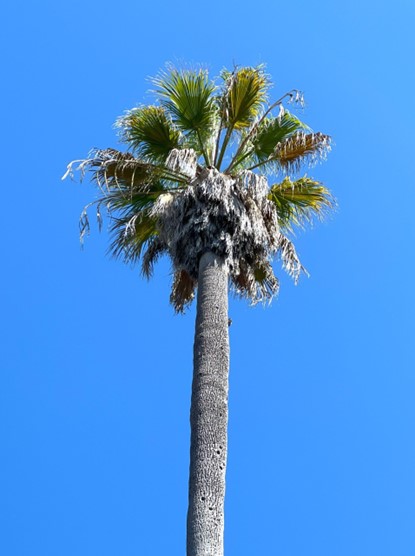
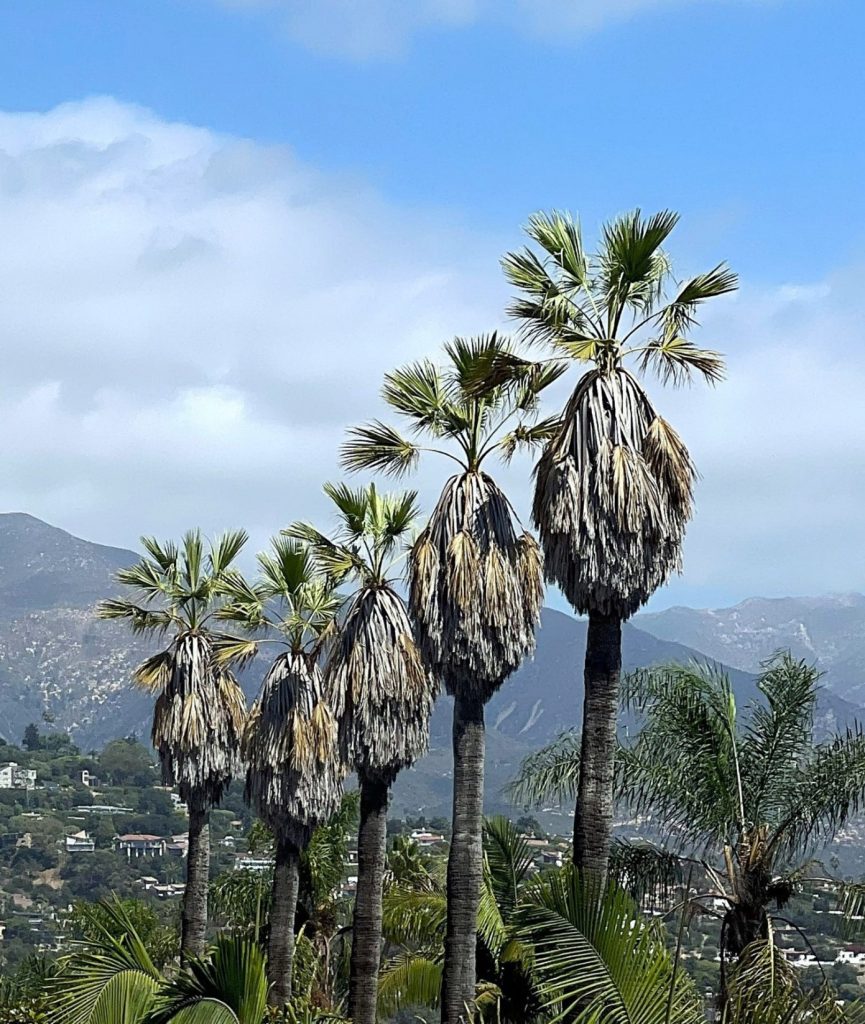
The California Fan Palm, Washingtonia filifera, is an iconic symbol of the American Southwest, its majestic silhouette gracing desert oases and urban landscapes alike. As the only palm species native to the southwestern United States, its history is deeply intertwined with the region’s natural and cultural heritage. This document provides a comprehensive history of the California Fan Palm, from its ancient origins and indigenous use to its botanical discovery, cultivation, and modern conservation status.
Origins and Natural Distribution
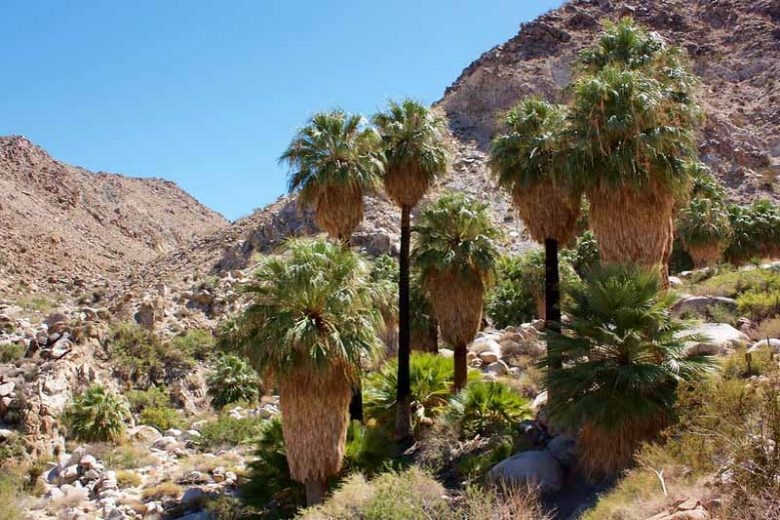
Washingtonia filifera is a true native of the arid landscapes of the American Southwest. Its natural range is centered in the Colorado, Mojave, and Sonoran deserts, where it forms lush oases around perennial water sources 1. These oases, often found along fault lines where groundwater is forced to the surface, are critical micro-habitats in the harsh desert environment 5.
The majority of native populations are found in Southern California, with notable groves in Joshua Tree National Park (including the Oasis of Mara, Thousand Palms Oasis, and Lost Palms Oasis), and the Coachella Valley Preserve 1. Arizona hosts the largest U.S. population outside of California, primarily in the Castle Creek area of the Bradshaw Mountains 1. Isolated native groves also exist in Nevada and extend south into Baja California, Mexico 1.
Native Distribution of Washingtonia filifera |
California |
Arizona |
Nevada |
Mexico |
Indigenous Use and Cultural Significance
Long before it became a horticultural icon, the California Fan Palm was a cornerstone of life for the indigenous peoples of the region, particularly the Cahuilla (pronounced Ka-wee-yah) [2, 3]. The Cahuilla, who have inhabited the deserts of Southern California for centuries, have a deep and spiritual connection to the palm.
According to Cahuilla oral tradition, the first palm tree was created from a tribal leader who transformed himself to provide for his people 3. This origin story, recorded in 1939 by Chief Francisco Patencio, highlights the palm’s central role in Cahuilla culture 3.
The Cahuilla utilized every part of the palm. The sweet fruit was eaten raw or ground into flour, and the fronds were woven into baskets, sandals, and roofing for their dwellings [2, 3]. They also practiced a form of fire management, intentionally setting fires in the oases to clear undergrowth and increase fruit production [3, 5].
“I am going to be a palm tree. My name shall always be Moul (palm tree).” – Cahuilla Origin Story 3
Botanical Discovery and Naming
The scientific naming of Washingtonia filifera is a story that spans continents.
For many years, the palm was thought to be a species of Brahea or Pritchardia.
It was not until 1879 that the German botanist Hermann von Wendland recognized its unique characteristics and published the name Washingtonia filifera.
The genus Washingtonia was named in honor of George Washington, the first President of the United States. This was a surprising tribute, as Washington had no connection to the plant or the region where it grows.
The specific epithet, filifera, is Latin for “thread-bearing,” a reference to the long, threadlike fibers that hang between the leaf segments.
There is some debate about the origin of the seeds from which the first scientifically described specimens were grown.
Evidence suggests that the seeds may have been collected from the Castle Creek area in Arizona, rather than California, and grown in a nursery in Belgium before being studied by Wendland [1, 4].
Cultivation and Ornamental Use
The California Fan Palm’s journey from desert oasis to urban icon began with the Franciscan missionaries in the 18th century, who planted them for ornamental purposes, possibly due to their biblical associations.
However, it was the turn-of-the-20th-century gardening craze in Southern California that cemented the palm’s status as a decorative plant.
The 1930s saw a massive effort to plant palm trees throughout Los Angeles, partly as a beautification project for the 1932 Olympic Games, but primarily as an unemployment relief program.
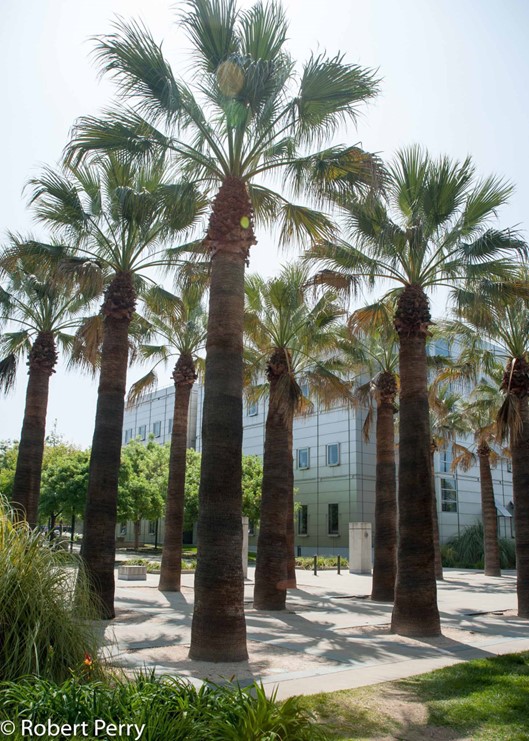
During this time, tens of thousands of palms, including both Washingtonia filifera and the related Washingtonia robusta (Mexican Fan Palm), were planted along city boulevards, creating the iconic palm-lined streets that are now synonymous with Los Angeles.
Ecology and Modern Conservation
California Fan Palm oases are vibrant ecosystems that support a diverse array of wildlife. Coyotes, foxes, and birds feed on the fruit, dispersing the seeds throughout the desert [1, 3].
The dense thatch of dead fronds provides shelter for small animals, and the palm groves are a critical habitat for species such as the hooded oriole and the western yellow bat [3, 5].
The giant palm-boring beetle plays a unique role in the health of the oasis. The larvae of this beetle spend years chewing through the trunks of older palms, eventually killing them and making way for new growth [3, 5].
The presence of these beetles is a sign of a healthy, thriving oasis ecosystem.
Despite its resilience, the California Fan Palm faces several threats in the modern era. Groundwater decline, habitat alteration, and hybridization with the more commonly planted Mexican Fan Palm are all concerns for native populations.
In urban areas, many of the palms planted in the 1930s are reaching the end of their natural lifespan, and the arrival of the red palm weevil poses a significant threat to both wild and cultivated palms.
Conservation efforts are focused on protecting the fragile desert oases and managing the threats to native populations. In Joshua Tree National Park and other protected areas, visitors are urged to stay on trails and respect the delicate balance of these unique ecosystems.
The future of the California Fan Palm, both in its native oases and in the urban landscapes it has come to define, will depend on our ability to address these challenges and preserve this enduring symbol of the American Southwest.
References
[1] “Washingtonia filifera – Wikipedia.”
[2] “A Brief History of Palm Trees in Southern California | Lost LA | Arts & Culture | PBS SoCal.”
[3] “Mythology of the California Fan Palm – Kimberly Us.”
[4] “A Great Name – In the Garden.”
[5] “Fan Palm Oases – Joshua Tree National Park (U.S. National Park Service).”