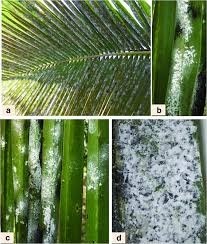
Whiteflies on Palms:

Detailed Damage Assessment and Effective Remedies

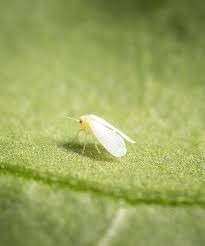
Whiteflies (family Aleyrodidae) are tiny, sap-sucking insects measuring 1–3 mm in length, with powdery white wings and a moth-like appearance.

Though often mistaken for true flies, they belong to the order Hemiptera, closely related to aphids, scale insects, and mealybugs.

On palm trees (family Arecaceae), certain species cause significant economic and aesthetic damage, particularly in tropical, subtropical, and greenhouse environments.

This article provides a comprehensive analysis of the damage whiteflies inflict on palms and evidence-based, integrated pest management (IPM) remedies to contain infestations.

Key Whitefly Species Affecting Palms

Aleurodicus dispersus

Common Name:
Spiraling whitefly

Primary Palm Hosts:
Coconut (Cocos nucifera),
Christmas palm (Adonidia merrillii),
Royal palm (Roystonea regia)

Geographic Hotspots:
Florida, Caribbean, Pacific Islands, South Africa

Dialeurodes citri

Common Name:
Citrus whitefly

Primary Palm Hosts:
Date palm (Phoenix dactylifera),
Canary Island date palm (Phoenix canariensis)

Geographic Hotspots:
Mediterranean, Middle East, California

Paraleyrodes minei

Common Name:
Nesting whitefly

Primary Palm Hosts:
Coconut, queen palm (Syagrus romanzoffiana)

Geographic Hotspots:
Central America, Brazil

Bemisia tabaci
(biotypes B & Q)

Common Name:
Silverleaf whitefly

Primary Palm Hosts:
Ornamental palms,
Pygmy date palm (Phoenix roebelenii)

Geographic Hotspots:
Global (greenhouses & field)

Note:

In South Africa (ZA), Aleurodicus dispersus and Bemisia tabaci biotype B are the most prevalent on ornamental and coconut palms, especially in KwaZulu-Natal and Limpopo.

Mechanisms of Damage to Palms

Whiteflies cause direct and indirect damage through feeding, excretion, and pathogen transmission.

Direct Feeding Damage

Sap depletion:

Nymphs and adults insert stylet-like mouthparts into phloem, extracting amino acids and sugars.

Consequence on palms:
Reduced turgor pressure → wilting of frond tips, especially in young palms.

Visible symptoms:

Chlorotic (yellow) spotting on upper leaf surfaces.

Premature frond senescence and necrosis.

Stunted growth in nursery palms (<2 years old).

Honeydew and Sooty Mold

Whiteflies excrete excess sugars as honeydew, a sticky substrate.

Sooty mold (Capnodium spp.) grows on honeydew, forming black fungal mats.

Impact on palms:

Blocks stomata → reduced photosynthesis (up to 30–40% in heavy infestations; Univ. of Florida, 2022).

Aesthetic degradation of ornamental palms (e.g., in landscapes and resorts).

Weakened structural integrity of fronds → increased wind breakage.

Vectoring Viral and Phytoplasma Diseases

Pathogen:
Palm lethal yellowing phytoplasma (16SrIV)

Disease:
Lethal yellowing (LY)

Palm Species Affected:
Coconut, date palm

Symptoms:
Frond yellowing, nut drop, spear leaf collapse

Pathogen:
Coconut whitefly-transmitted virescens

Disease:
Coconut foliar decay virus

Palm Species Affected:
Coconut

Symptoms:
Necrotic streaking, reduced copra yield

South African context:
While LY is not established in ZA, Bemisia tabaci transmits maize streak virus-like symptoms in experimental palm trials (ARC-PPRI, 2023).

Quantitative Damage Thresholds

Low Infestation Level

Adults per Frond: <50

Economic Impact:
Cosmetic damage only

Moderate Infestation Level

Adults per Frond: 50–200

Economic Impact:
10–20% photosynthesis loss

Severe Infestation Level

Adults per Frond: >200

Economic Impact:
>30% yield loss (coconut), high mortality in seedlings

Integrated Pest Management (IPM) Remedies

1. Cultural & Mechanical Controls

Method:
Pruning and Sanitation

Procedure:
Remove heavily infested lower fronds; destroy (burn/bury)

Efficacy:
Prevents pupal survival

Method:
High-pressure water sprays

Procedure:
Use 800–1000 kPa jet on underside of fronds (early morning)

Efficacy:
Dislodges 60–80% nymphs/adults

Method:
Yellow sticky traps

Procedure:
Deploy 1 trap per 10 m² at canopy height

Efficacy:
Monitors & reduces adult population by 40%

2. Biological Control (Preferred in ZA)

Natural Enemy:

Encarsia formosa (parasitoid wasp)

Target Stage: Nymphs

Release Rate (ZA): 5–10 adults/m²

Natural Enemy:

Delphastus catalinae (predatory beetle)

Target Stage: Eggs & nymphs

Release Rate (ZA): 1 beetle per 5 whiteflies

Natural Enemy:

Nephaspis oculatus

Target Stage: All stages

Release Rate (ZA): 500/ha in nurseries

Natural Enemy:

Beauveria bassiana (BotaniGard®)

Target Stage: Adults & nymphs

Release Rate (ZA): 1×10⁸ spores/mL spray

Success story:

In KwaZulu-Natal, Encarsia releases reduced A. dispersus by 87% in 8 weeks (DAFF, 2021).

3. Chemical Control (Last Resort)

Use only when biological/cultural methods fail and infestation exceeds 200 adults/frond.

Active Ingredient:

Imidacloprid (soil drench)

Mode of Action:
Systemic (neonicotinoid)

Application Notes (ZA Registration):
0.5 g a.i./m canopy diameter; avoid during flowering (bee risk)

Active Ingredient:

Spirotetramat (Movento®)

Mode of Action:
Lipid biosynthesis inhibitor

Application Notes (ZA Registration):
Foliar; translaminar action

Active Ingredient:

Horticultural oil (paraffinic)

Mode of Action:
Suffocation

Application Notes (ZA Registration):
1–2% v/v; apply <28°C to avoid phytotoxicity

Active Ingredient:

Insecticidal soap

Mode of Action:
Membrane disruption

Application Notes (ZA Registration):
2% solution; target underside of fronds

ZA Regulation:

Neonicotinoids restricted under Act 36 of 1947. Use SANSOR-approved products only.

Step-by-Step Remedy Protocol (South Africa)

  1. Scout weekly using yellow sticky traps and frond inspection (underside).

  2. Threshold trigger: >100 adults/frond → initiate control.

  3. Week 1–2:
    • Prune & destroy infested fronds.
    • Apply high-pressure water wash (twice, 5 days apart).

  4. Week 3:
    • Release Encarsia formosa (order from BioBee SA or Koppert SA).
    • Hang sticky traps.

  5. Week 4–6:
    • Monitor reduction. If <50% decline → apply BotaniGard® (fungal spray).

  6. Chemical fallback (only if >200 adults persist):
    • Soil drench with imidacloprid (Confidor®) at label rate.

Preventive Strategies for Palms in ZA

  • Quarantine new palms for 14 days; inspect undersides.

  • Avoid over-fertilization (high N → lush growth attracts whiteflies).

  • Plant resistant cultivars:
    • Malayan Dwarf coconut → moderate resistance to A. dispersus.
    • Pygmy date palm hybrids with thicker cuticles.

  • Intercrop with repellent plants: Marigolds (Tagetes erecta) reduce oviposition by 35%.

Whiteflies pose a triple threat to palms: sap loss, sooty mold, and disease transmission.

In South Africa, Aleurodicus dispersus and Bemisia tabaci are the dominant pests, capable of reducing photosynthesis by over 30% in severe cases.

An IPM approach prioritizing biological control (Encarsia, predatory beetles) and cultural practices (pruning, water sprays) achieves 80–90% control with minimal environmental impact.

Chemical interventions should be targeted, systemic, and compliant with DAFF regulations.

For real-time monitoring in ZA, use the ARC-PPRI Pest App or contact Biosecurity SA for whitefly alerts.

References (2021–2025):

DAFF South Africa (2021). Spiraling Whitefly Management Guidelines.

University of Florida IFAS (2022). Whitefly IPM on Palms.

ARC-PPRI (2023). Bemisia tabaci Biotype Distribution in ZA.

EPPO Global Database (2024). Aleurodicus dispersus.

For commercial growers in ZA: Contact RealIPM (Kenya/SA distributor) for Encarsia cultures.

Facebook Twitter Instagram Linkedin Youtube