
A Journey Through Time:
The Detailed History of the Windmill Palm, Trachycarpus fortunei
Author: Johan Grabe Founder and CEO Koingnaas Palms
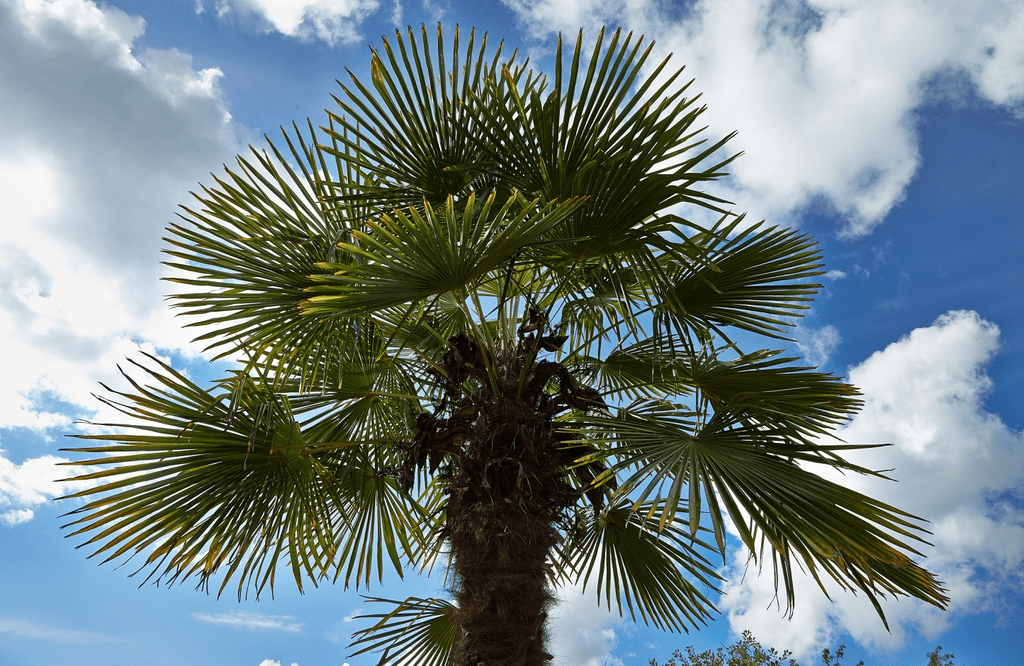
The Windmill Palm, Trachycarpus fortunei, is one of the most recognizable and widely cultivated hardy palms in the world.
Its distinctive fan-shaped leaves and trunk covered in a coarse, fibrous mat have made it a favorite in temperate gardens far from its native Asian homeland.
This document delves into the detailed history of this resilient palm, tracing its journey from a utilitarian plant in ancient China to a global ornamental and, in some regions, an invasive species.
Ancient Origins and Millennia of Use in Asia
The precise origins of Trachycarpus fortunei are obscured by a history of cultivation in China and Japan that spans thousands of years.
This long history of human use makes it difficult to determine the palm’s exact natural range. However, it is believed to have originated in the mountainous regions of central and southern China, southern Japan, northern Myanmar, and northern India, growing at altitudes up to 2,400 meters (7,874 feet).
For millennia, the Windmill Palm was not primarily an ornamental but a vital resource.
Its most important product was the coarse, dark brown fiber harvested from the leaf sheaths clasping the trunk.
This fiber, known for its exceptional strength and durability, was woven into a vast array of essential goods.
Traditional Uses of Trachycarpus fortunei Fiber:
- Rope and Sacks
- Brushes and Brooms
- Mats and Mattresses
- Rain Capes
Beyond its fiber, virtually every part of the palm was utilized. It provided structural materials, food for humans and livestock, and ingredients for traditional medicines listed in the Chinese Pharmacopeia.
This extensive utility explains its widespread cultivation throughout temperate regions of China, where it was a common sight from the Yangtze River Valley to the courtyards of the Forbidden City.
Introduction to the Western World: Siebold and Fortune
The Windmill Palm’s journey to the West involved two key figures in 19th-century botany.
The first introduction to Europe was made by the German physician and botanist Philipp Franz von Siebold.
In 1830, Siebold brought the palm to Europe from the Dutch trading post of Dejima in Japan, where it had long been cultivated.
However, the palm’s widespread popularity is more closely associated with the Scottish botanist and plant hunter Robert Fortune. In 1849, Fortune, on an expedition for the Horticultural Society of London, encountered the palm on the island of Chusan (now Zhoushan) off the coast of China. He collected specimens and successfully introduced them to Britain, sending them to the Royal garden of Prince Albert and to Kew Gardens. His introduction captured the imagination of the Victorian public, and the palm soon became a fashionable addition to gardens in Britain and beyond. In his honor, the species was given the epithet fortunei.
Robert Fortune was a pivotal figure in 19th-century botany, undertaking several perilous journeys to China and Japan. Disguised as a Chinese merchant, he famously smuggled tea plants from China to India for the British East India Company and introduced over 250 ornamental plants to the West.
Global Spread and Ornamental Cultivation
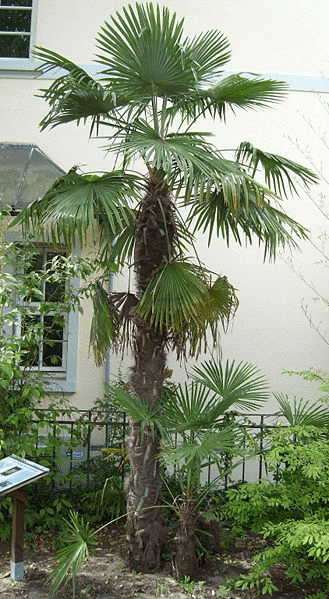
Following its introduction, the Windmill Palm spread rapidly through the temperate world, its popularity driven by its exotic appearance and, most importantly, its remarkable cold hardiness.
It is one of the hardiest of all palms, capable of withstanding winter temperatures as low as -15 to -20°C (5 to -4°F), with some unconfirmed reports of survival at -27.5°C in Bulgaria.
This resilience allows it to be cultivated in regions where few other palms can survive.
In the United Kingdom, its success and reliability earned it the prestigious Award of Garden Merit (AGM) from the Royal Horticultural Society (RHS).
It is now a common feature in gardens across the UK, France, Belgium, the Netherlands, and Germany. In North America, it is cultivated along the West Coast from California to British Columbia and on the East Coast from Florida to Connecticut.
Modern Status: An Invasive Icon
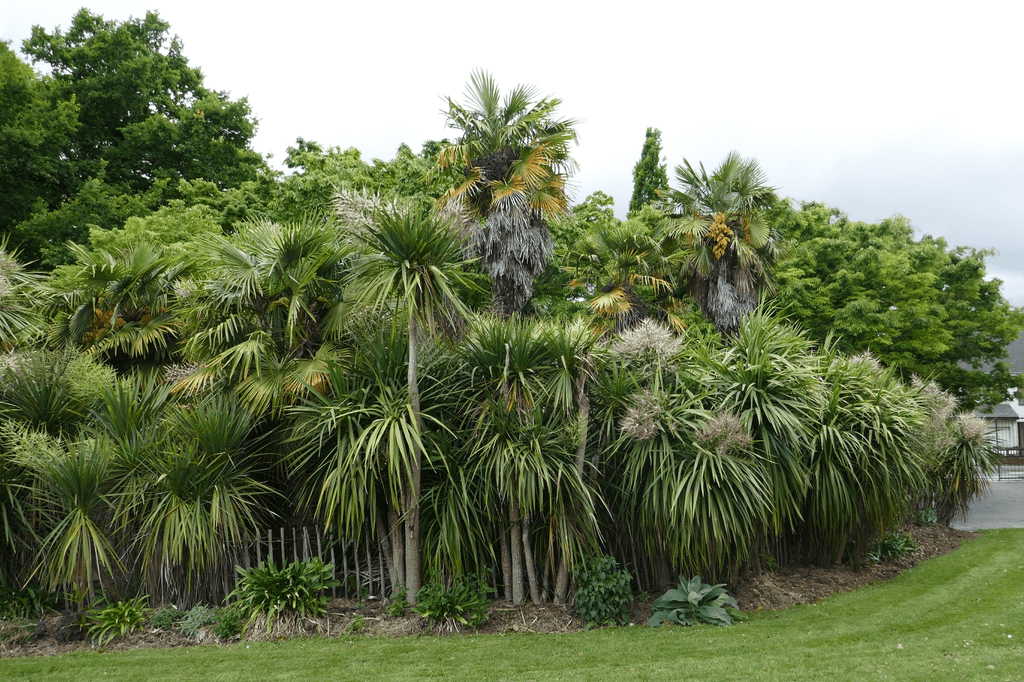
While celebrated as a garden ornamental, the Windmill Palm’s success has had unintended consequences. In some regions, its ability to thrive and reproduce has allowed it to escape cultivation and become naturalized. In southern Switzerland and parts of northern Italy, Trachycarpus fortunei is now officially classified as an invasive species.
The palm’s dense foliage shades out native flora, and its proliferation in forests can alter the natural ecosystem. This has created a complex management challenge, as the palm is also a beloved, iconic plant associated with the region’s mild climate.
A 2022 study in Switzerland highlighted this conflict, finding that public perception of the palm is strongly influenced by cultural background and that many people are resistant to control measures for such a charismatic species. This dual status as a celebrated icon and a problematic invader marks the latest chapter in the long and complex history of the Windmill Palm.